What Is a Gyratory Sifter?
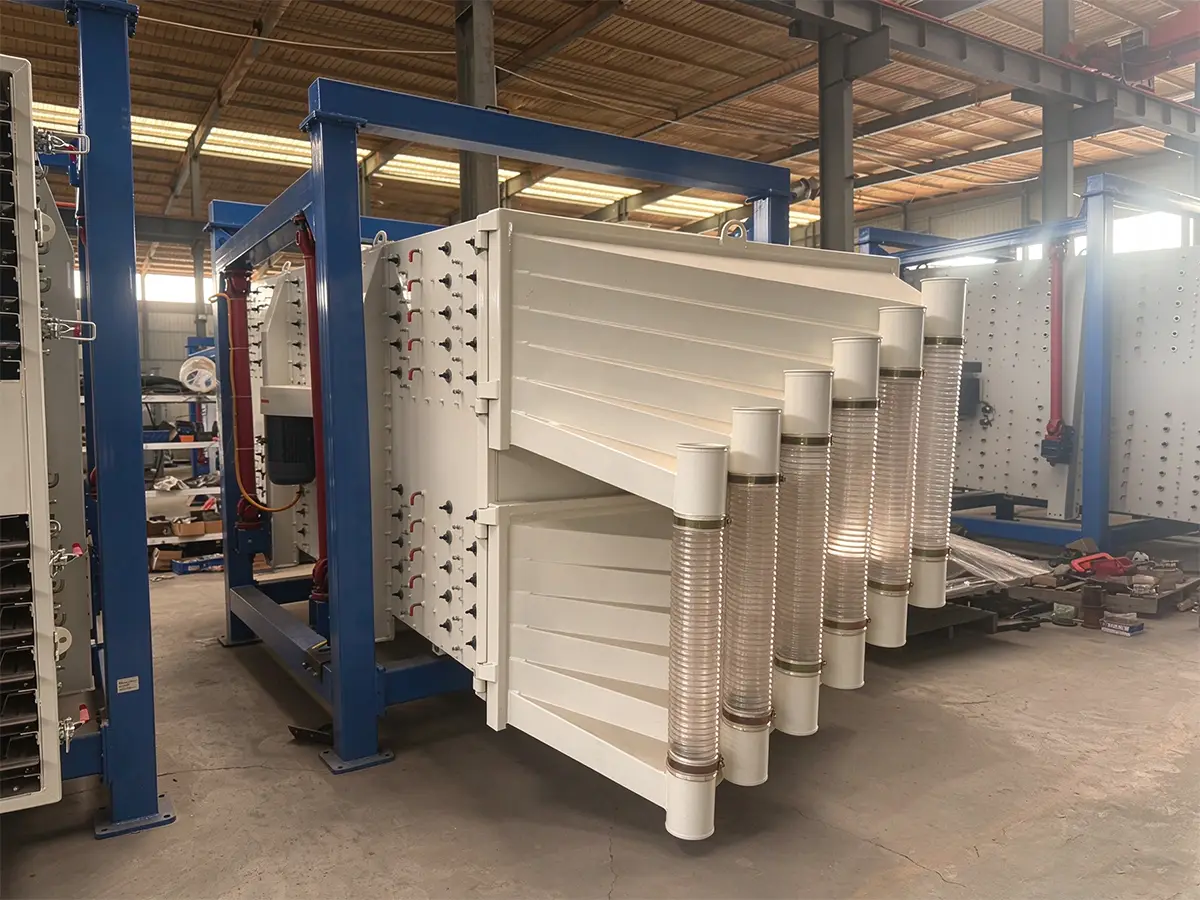
A gyratory sifter, also known as a gyratory screen, rectangular gyratory screener, or gyratory screening machine, is an industrial screening system designed for high-capacity particle size classification and fine material separation. It uses a controlled horizontal gyratory and reciprocating motion to distribute material across a large screening surface, allowing undersized particles to pass through the mesh while oversized particles discharge separately.
Sanyuantang gyratory sifters support 2–200 mesh screening, with up to 10 screen decks and a capacity of up to 25 tons/hour, depending on material properties and operating conditions. Available in single- and dual-drive configurations, they are widely used for screening silica sand, quartz sand, frac sand, calcium carbonate, industrial salt, and other dry bulk materials.
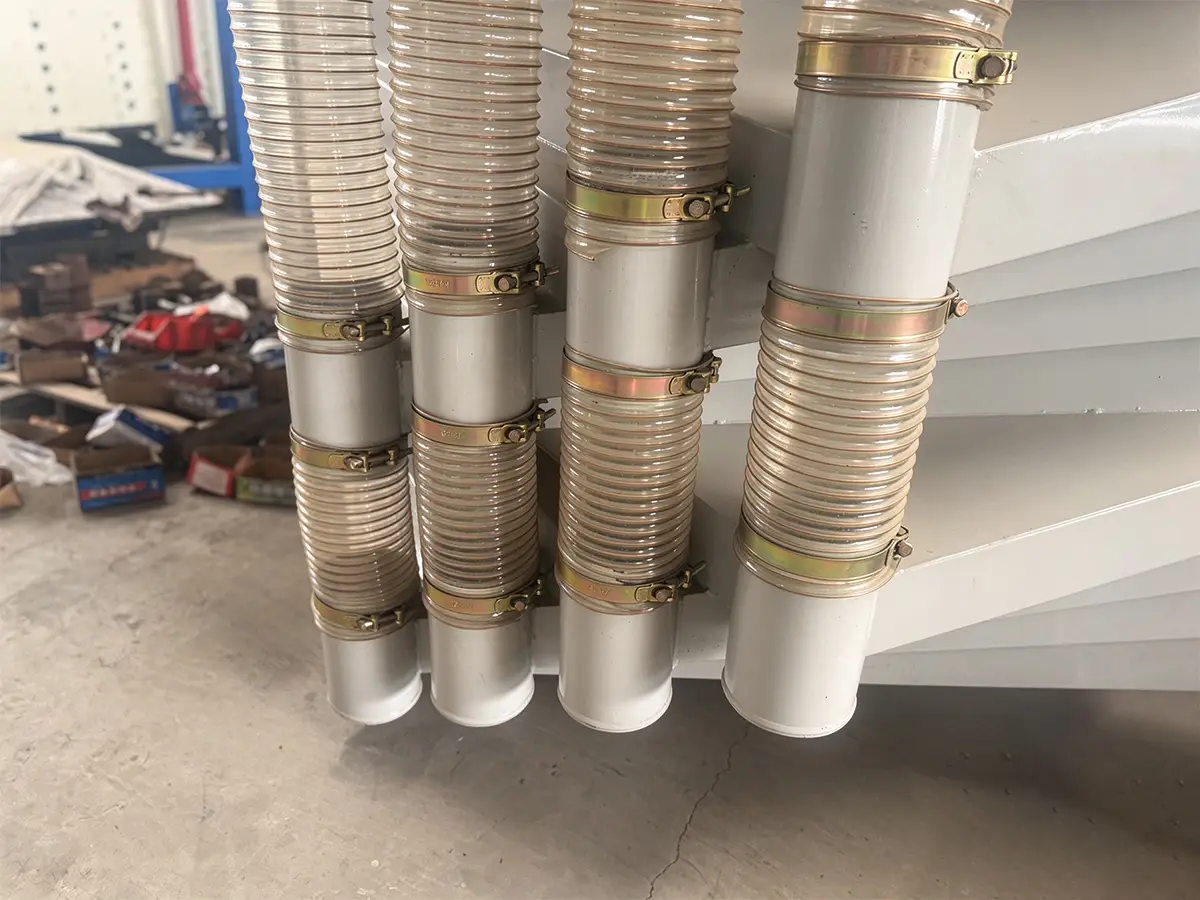
How Does a Gyratory Sifter Work?
A gyratory sifter classifies bulk powders and granules by particle size using a motor-driven eccentric mechanism and a near-horizontal reciprocating screen box. The screening motion distributes the feed across the mesh, promotes material stratification, and advances retained particles toward the discharge outlets. For industrial processing lines, separation performance depends on matching mesh aperture, effective screening area, operating speed, and feed rate to the material’s particle size distribution, bulk density, and moisture content.
- Feed Distribution: Material enters through the inlet distributor and spreads across the screening deck. Controlled, uniform feeding helps prevent local overloading and improves utilization of the available screen area.
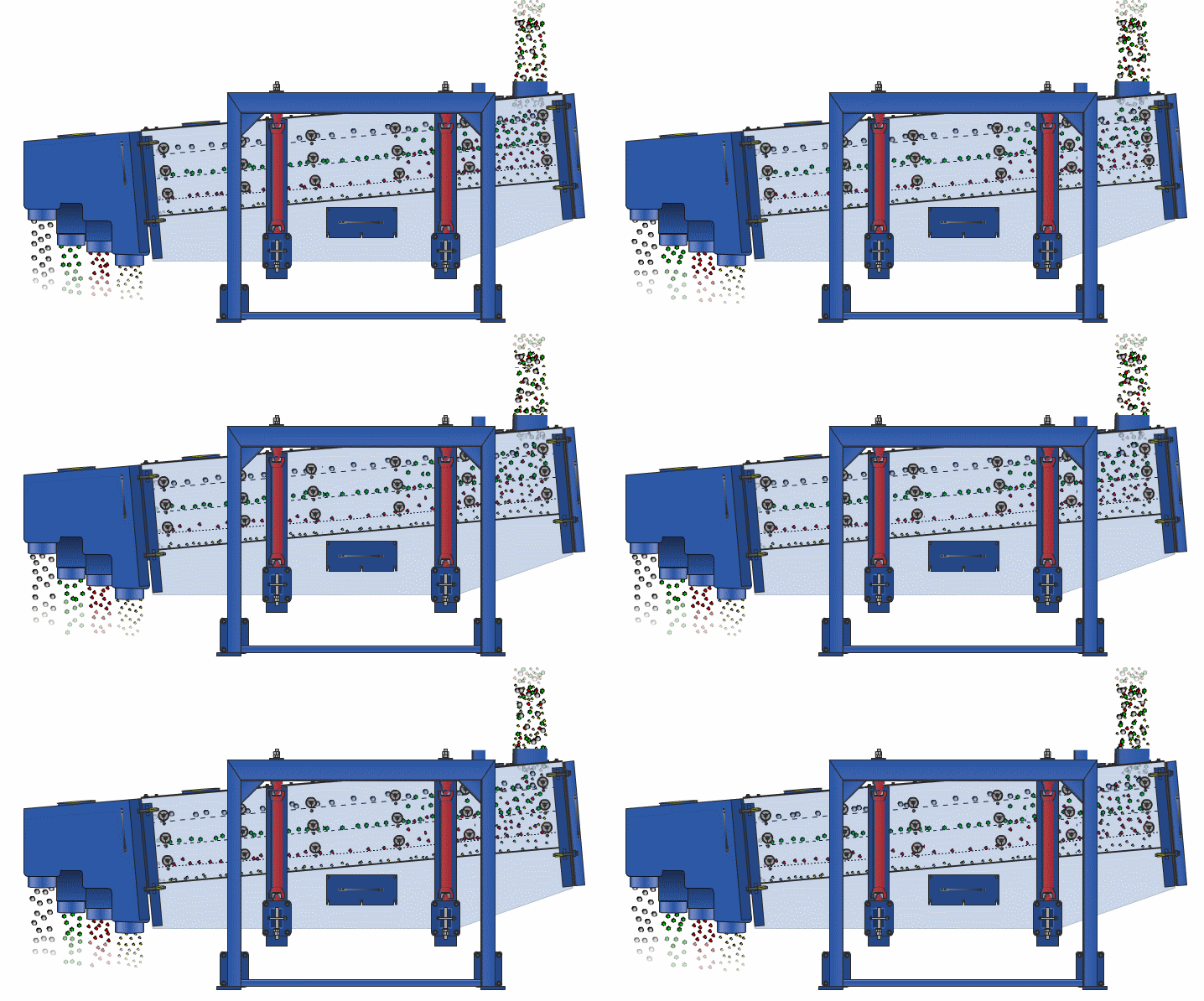
- Screen Box Motion: The eccentric drive generates the screening stroke. In a rectangular gyratory screener, motion transitions from circular at the feed end to elliptical through the centre and nearly linear toward the discharge end.
- Size Classification: Undersize particles pass through the mesh apertures; retained oversize particles travel to a dedicated outlet. Multiple decks provide successive size cuts, with the mesh configuration selected for the required product fractions.
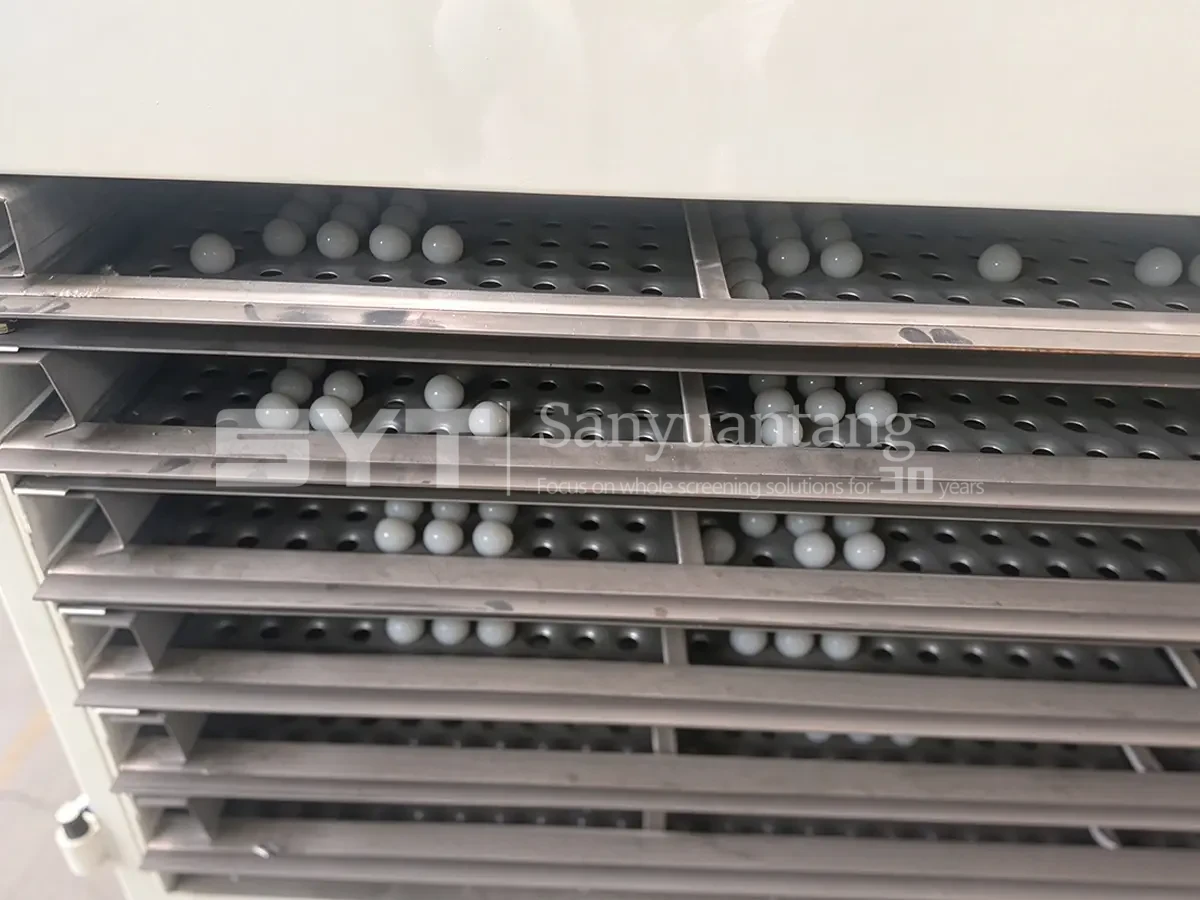
- Mesh Cleaning: Bouncing balls beneath the mesh repeatedly strike its underside to help release lodged particles, maintain open screening area, and support continuous operation.
Gyratory Sifter Structure
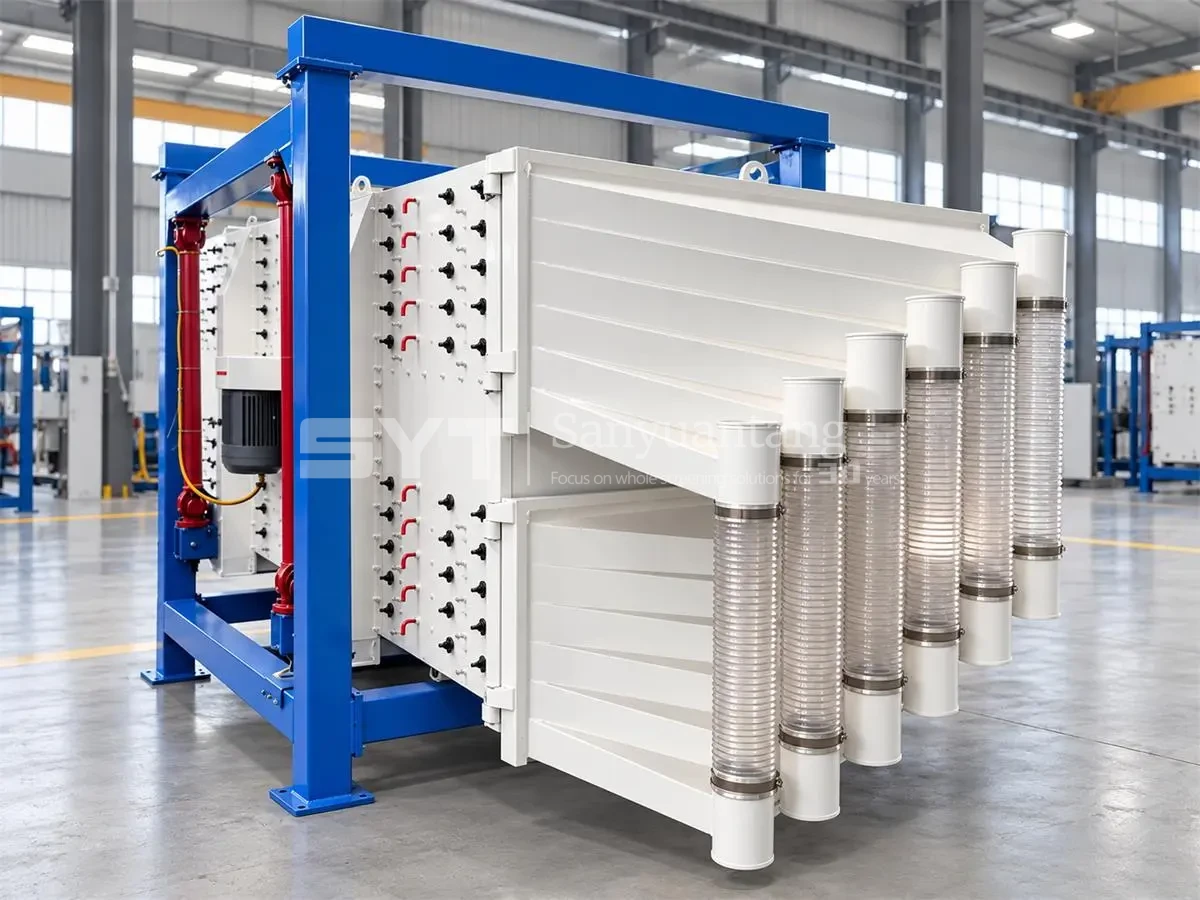
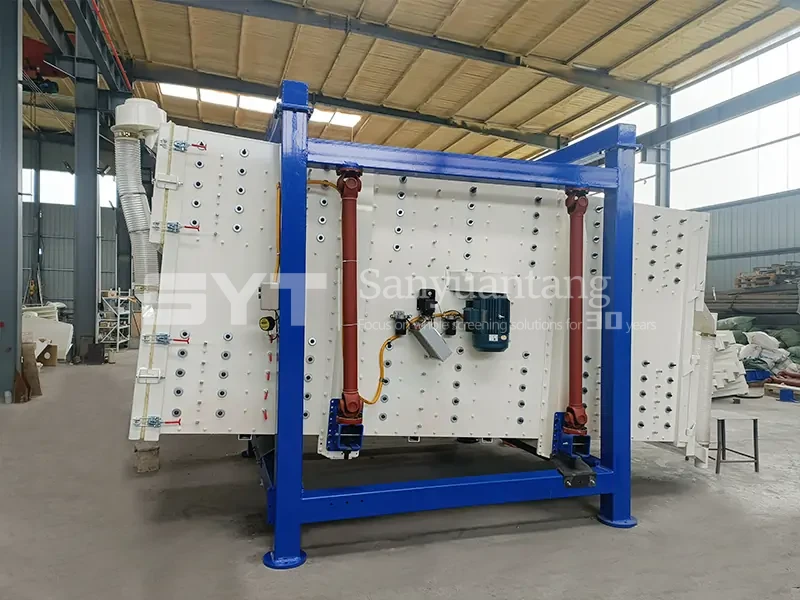
The gyratory sifter consists of a rectangular screen box, drive assembly, screen frames, suspension system and material discharge outlets. Its reciprocating screening motion distributes material across the screen surface for continuous particle size classification. The enclosed, multi-deck structure supports high-capacity screening, screen replacement and separate collection of different particle size fractions.
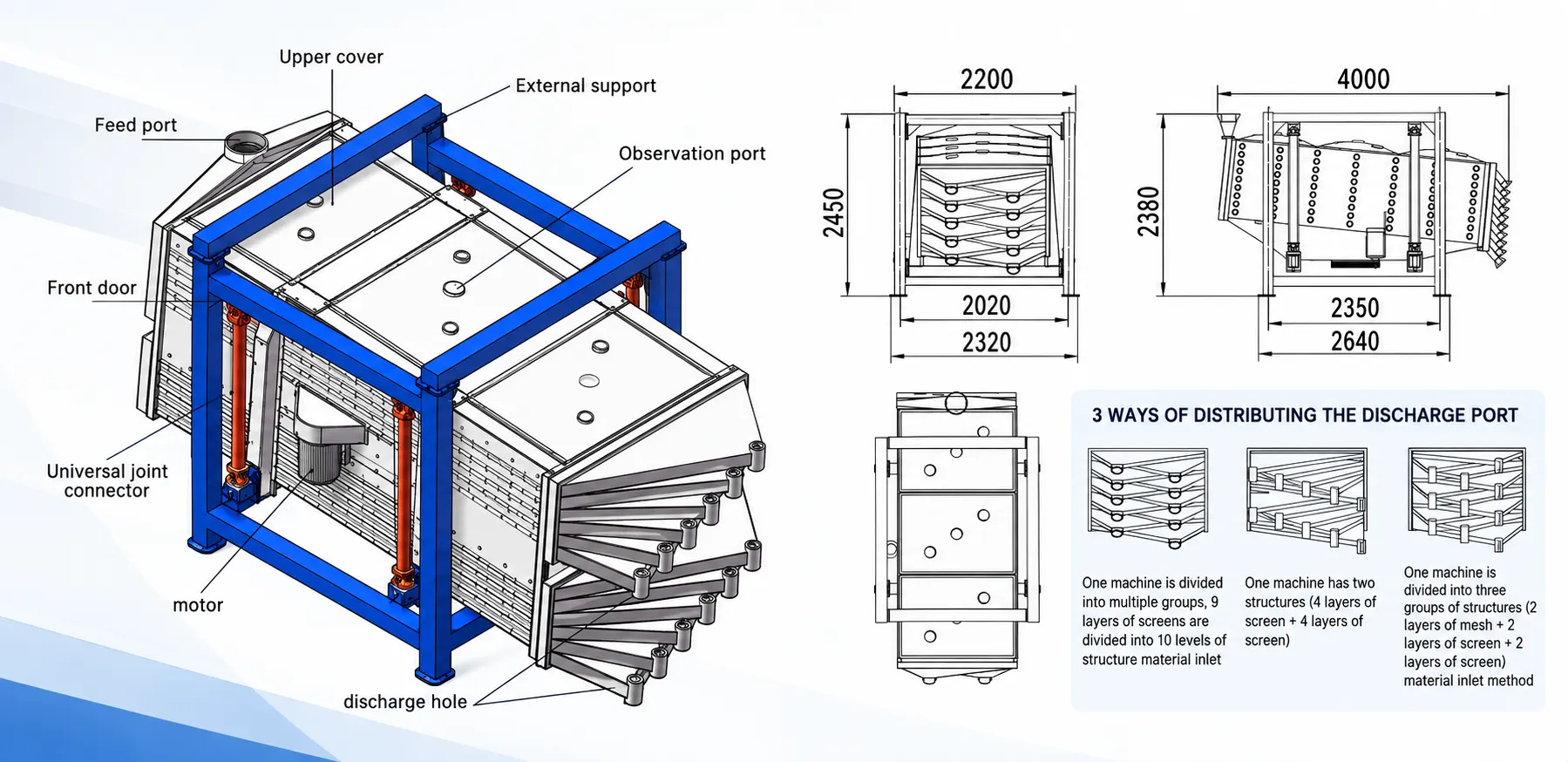
- Screen Box: Enclosed rectangular housing for the screening decks and material flow.
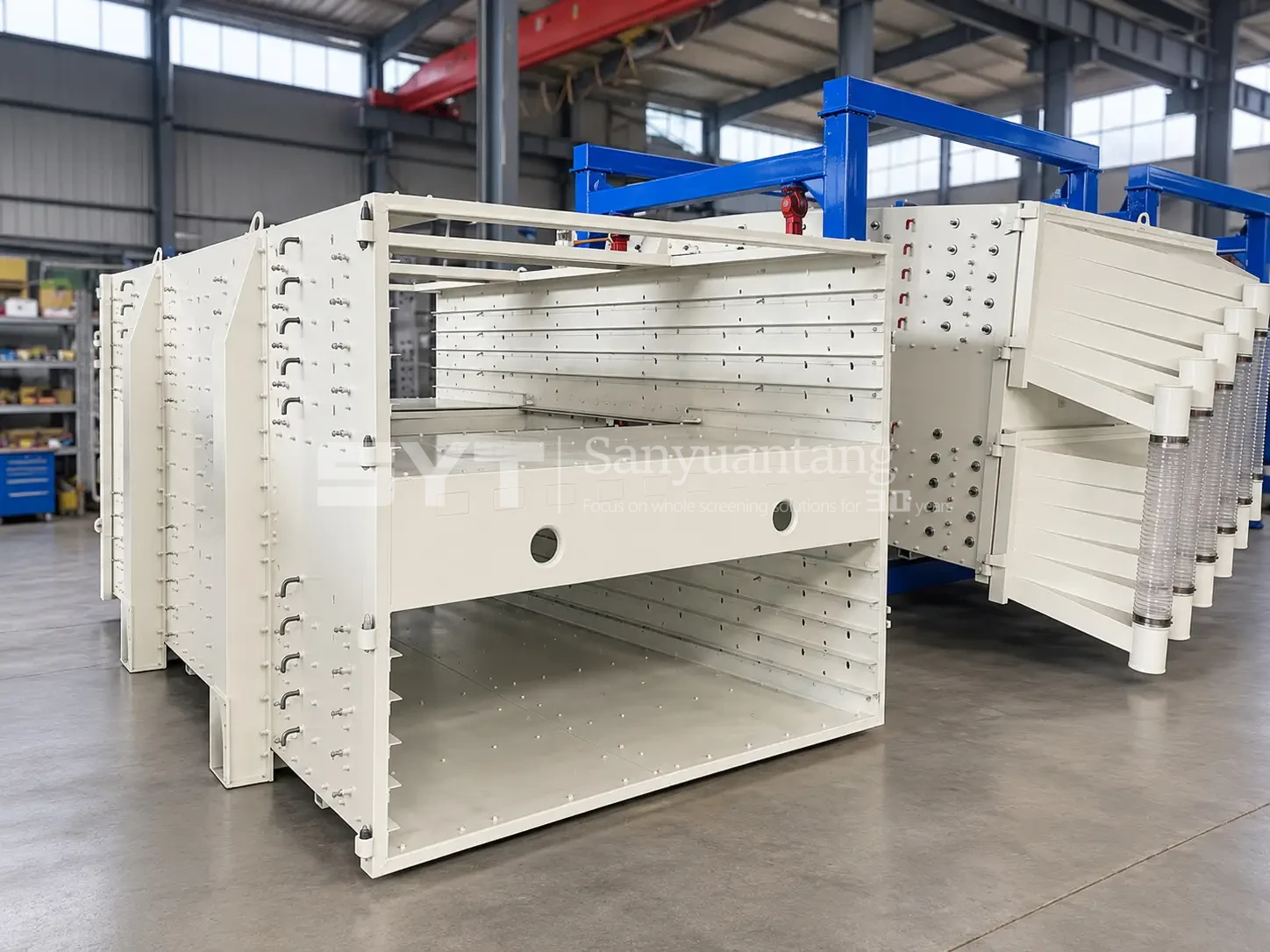
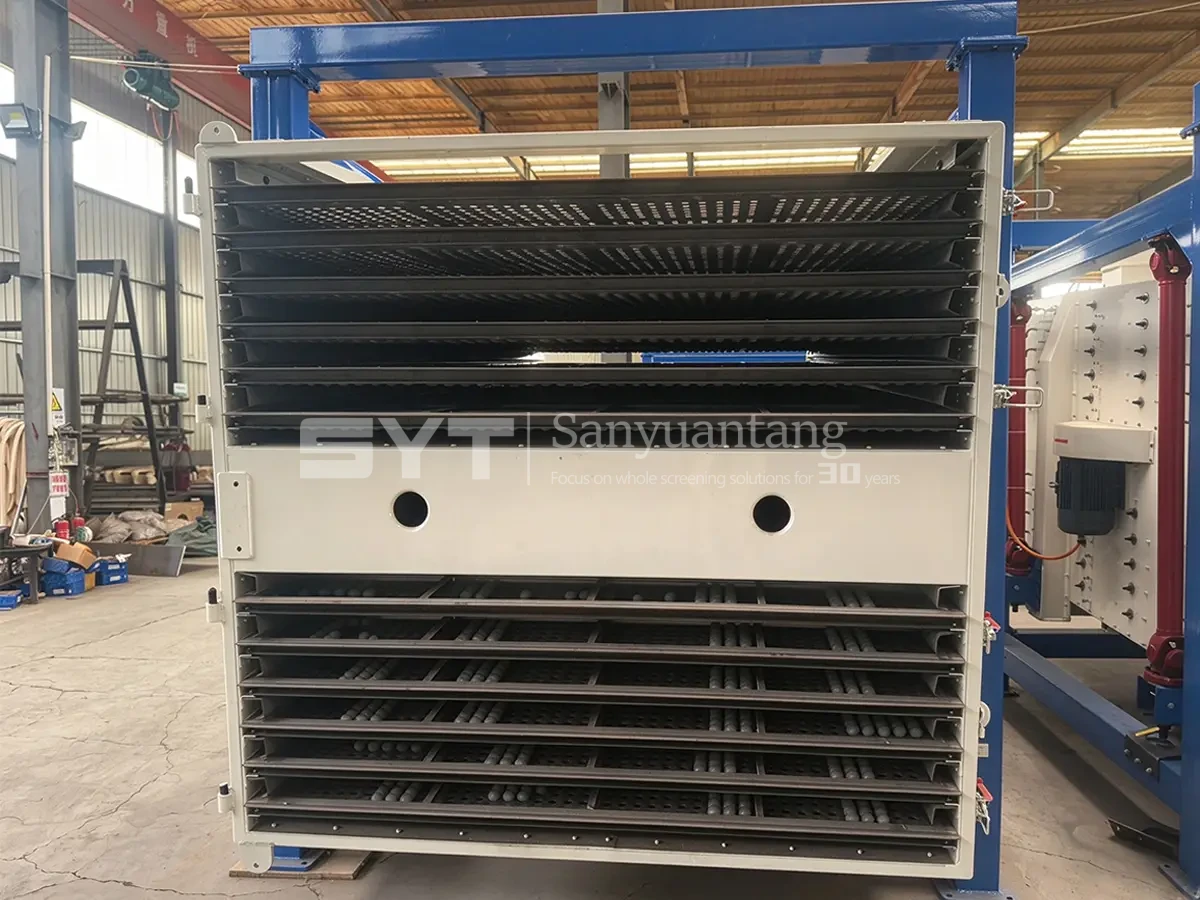
- Screen Frames: Secure the screen mesh and support multi-deck classification.
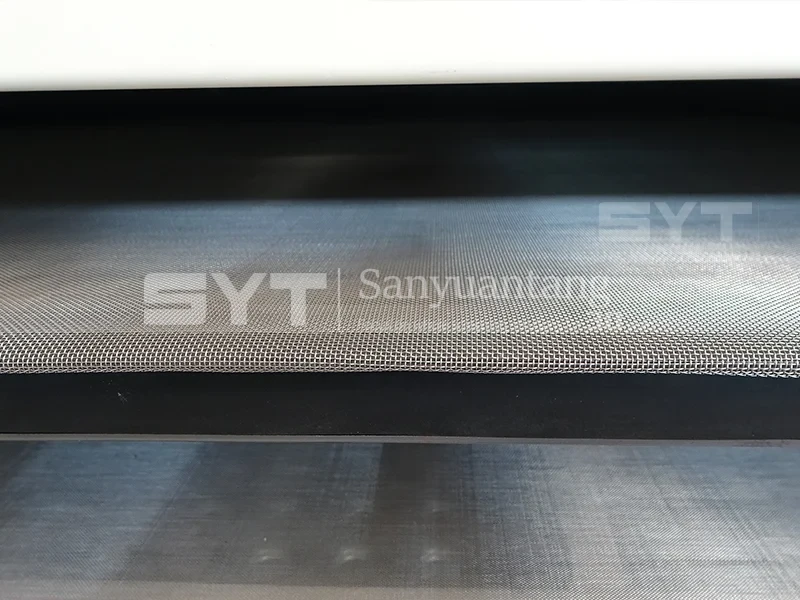
- Screen Mesh: Separates particles according to the specified mesh aperture.
- Drive Assembly: Generates gyratory reciprocating motion for particle separation.
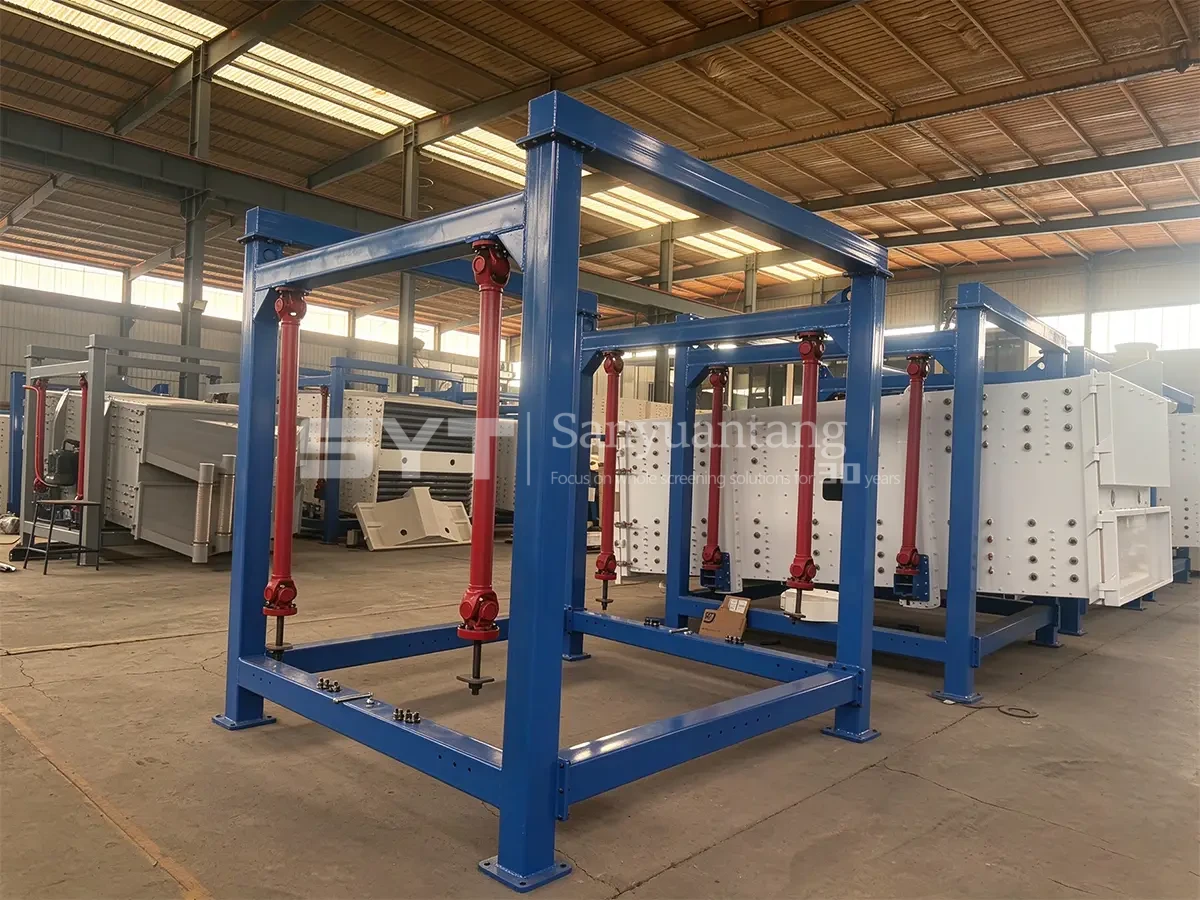
- Suspension System: Supports the screen box and reduces vibration transfer to the supporting structure.
- Material Distributor: Spreads feed material evenly across the screening surface.
- Bouncing Ball Cleaning System: Dislodges particles trapped in mesh openings to reduce blinding.
- Feed Inlet: Directs material from upstream equipment into the screening chamber.
- Discharge Outlets: Separately discharge different particle size fractions.
- Inspection Covers: Provide access for screen inspection, cleaning and maintenance.
Parts Details Show
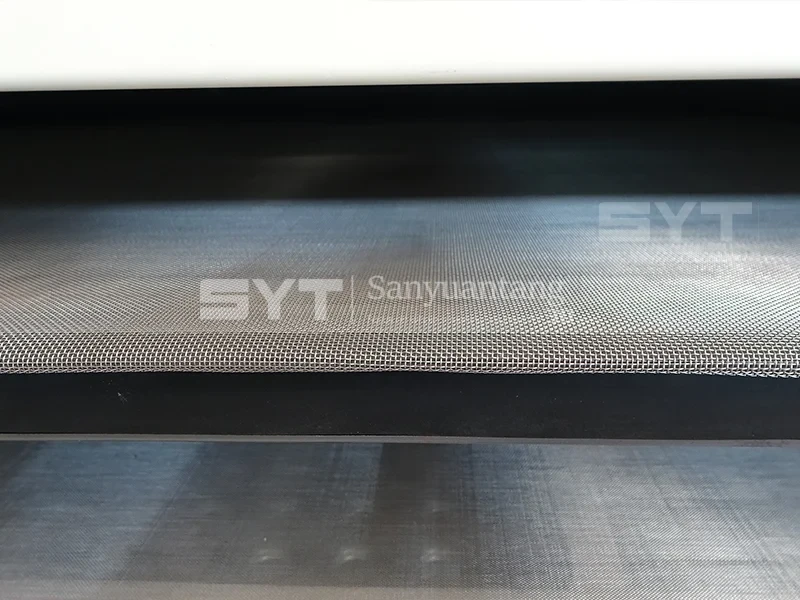
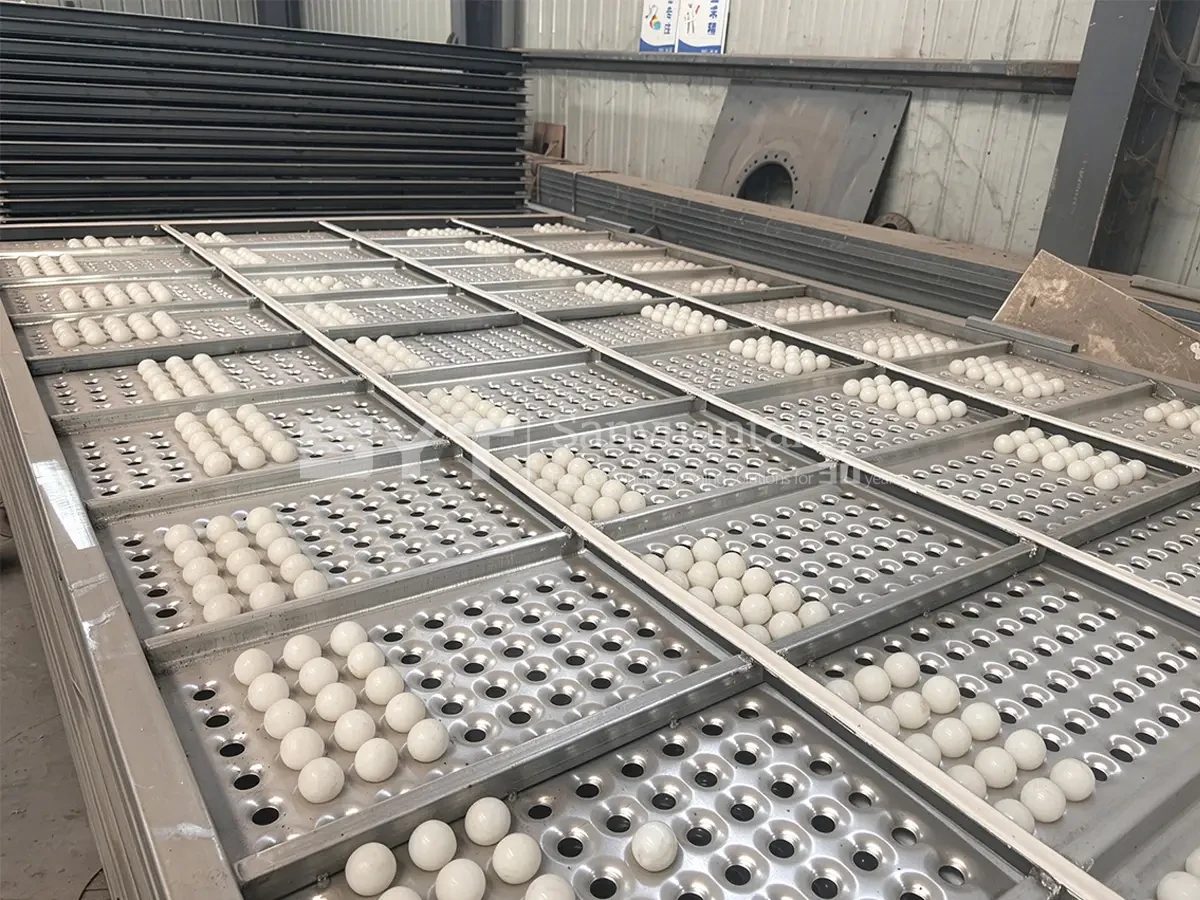
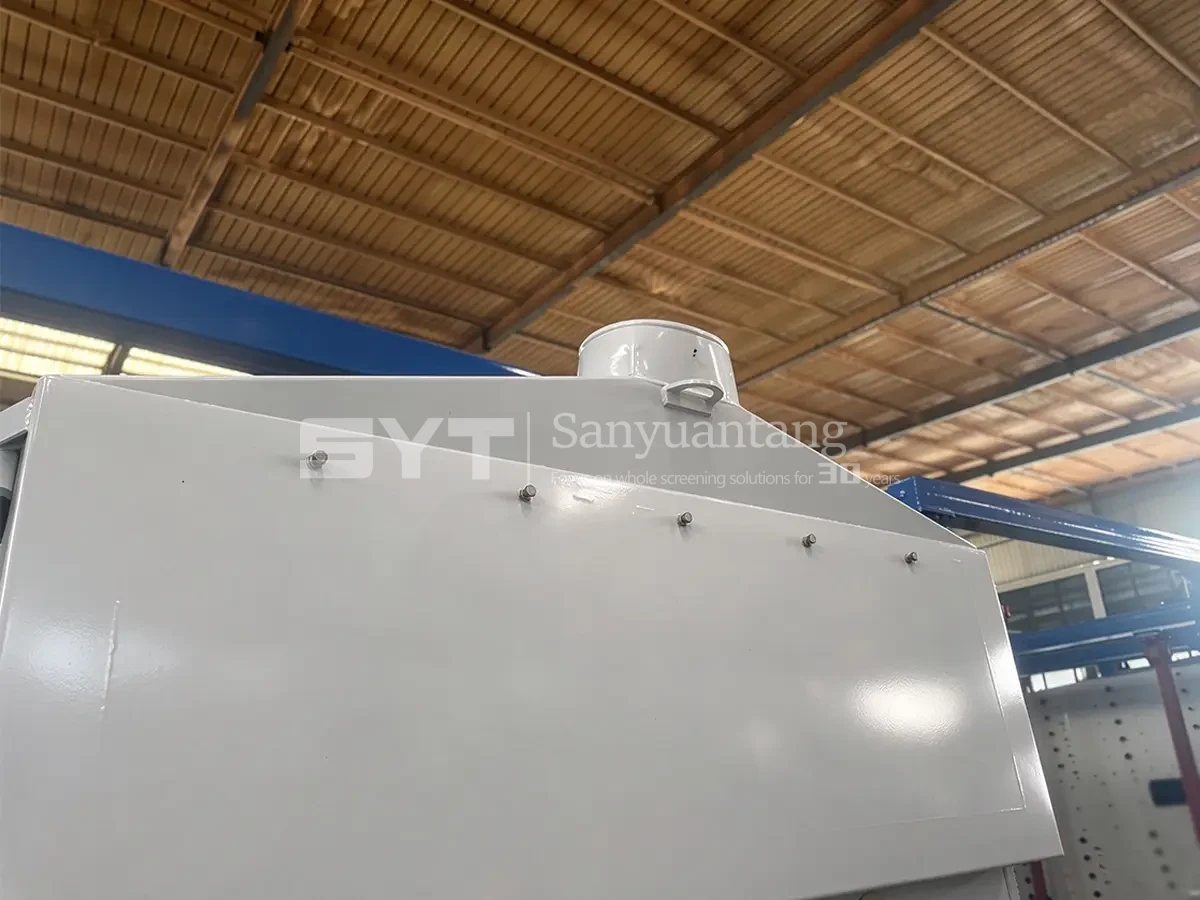
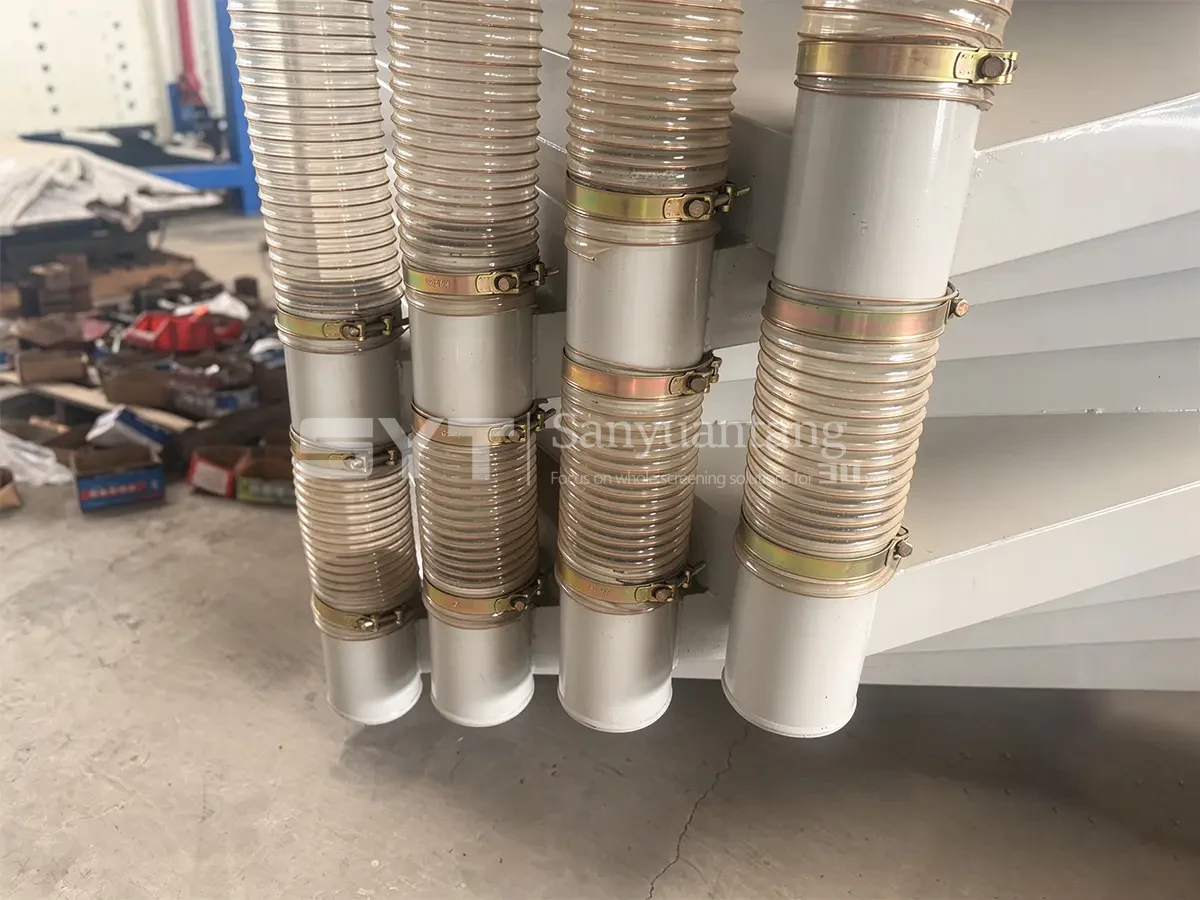
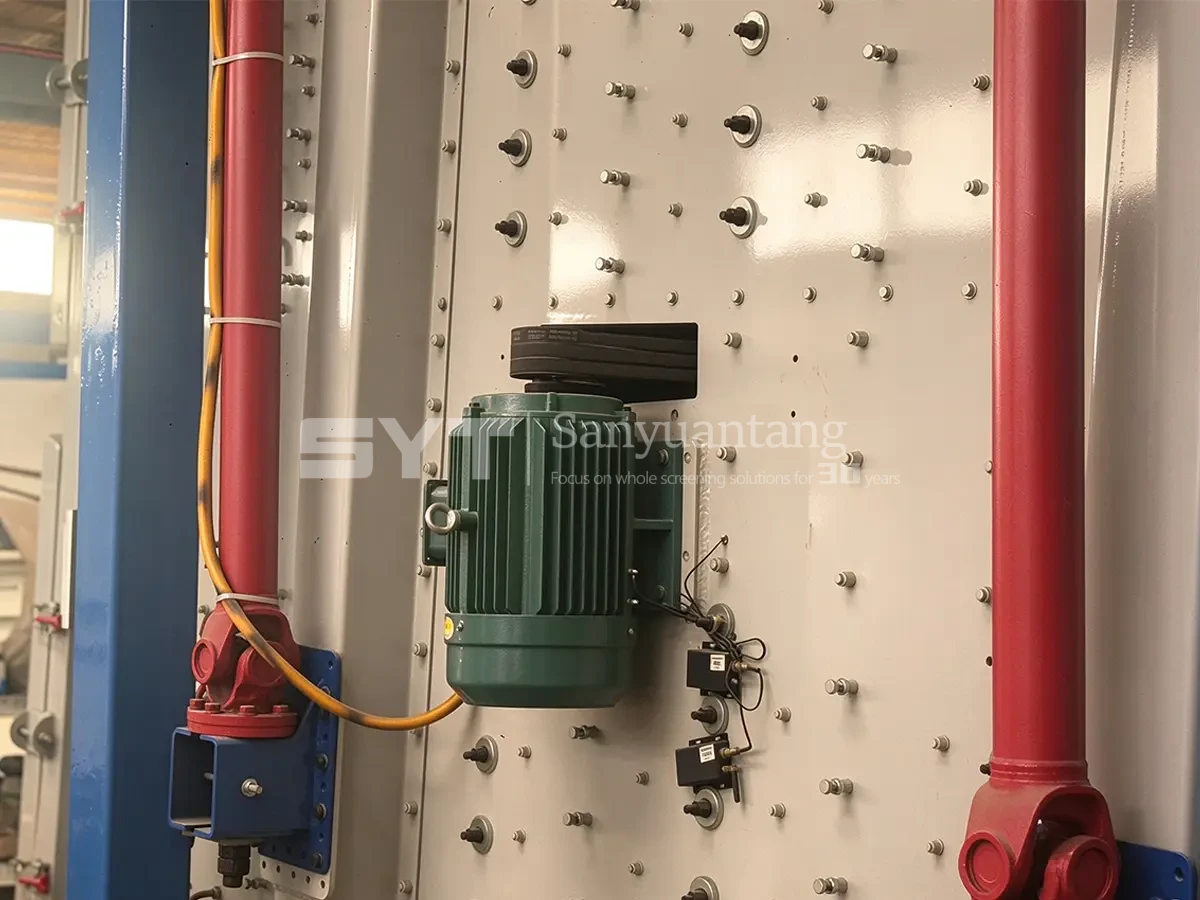
Video
Advantages
Large Screening Surface
The FYBS-1536 has a listed screen size of 1.5 × 3.5 m, while the FYBS-2040 provides 2.0 × 4.0 m. The rectangular deck supports uniform feed distribution and continuous particle size classification.
Multi-Deck Classification
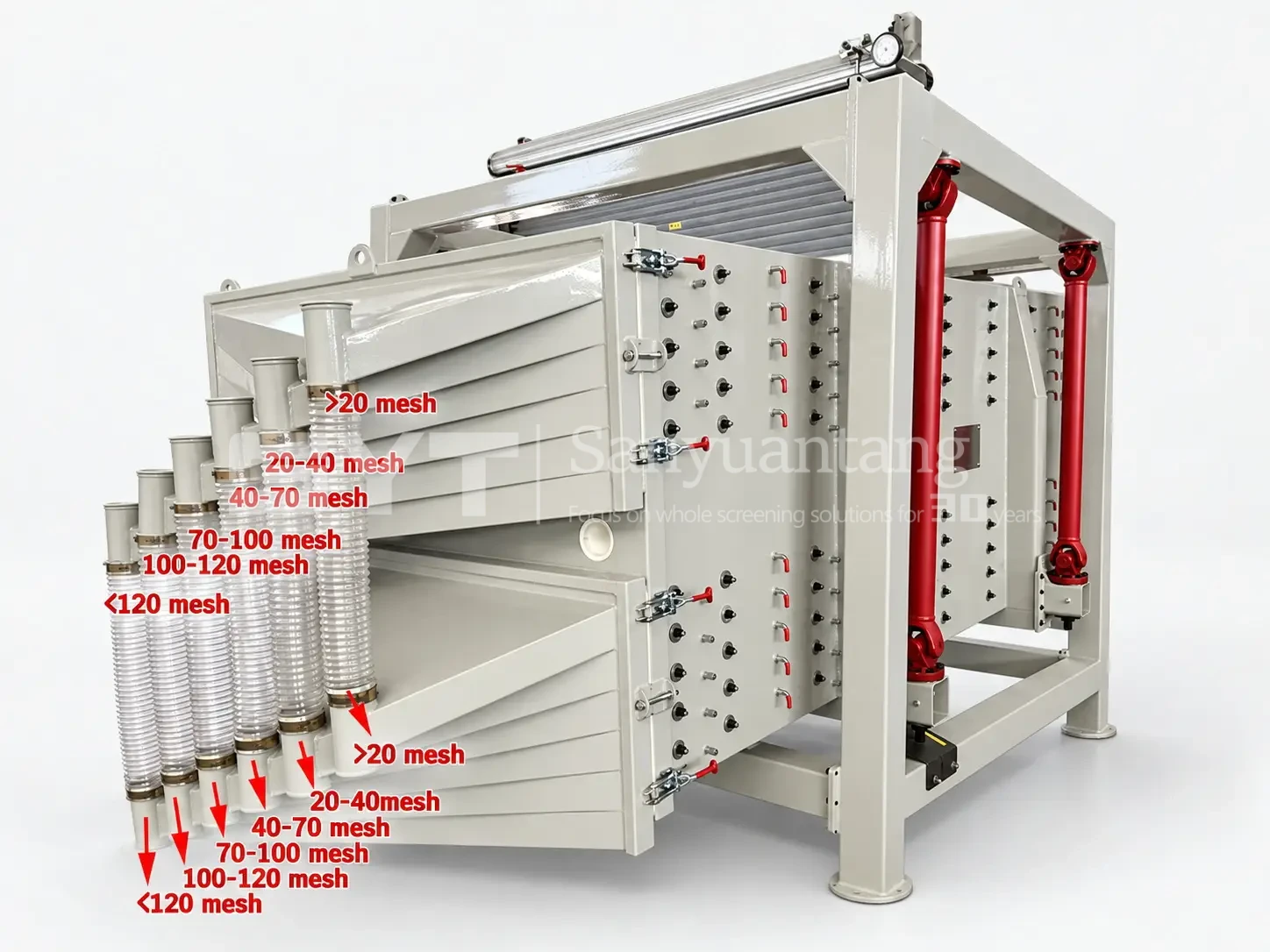
Available with 1–10 screen layers to suit the required separation stages. A nine-layer sequential arrangement can produce 10 size fractions, with dedicated outlets for separate product collection.
Controlled Gyratory Motion
The screen-box stroke range is 25–60 mm for the FYBS-1536 and FYBS-2040. Near-horizontal reciprocating motion promotes material stratification and repeated particle contact with the screening mesh.
Replaceable Screening Media
The FYBS gyratory screen range supports 2–200 mesh selection. Quick-opening screen frames simplify inspection and replacement, while mesh aperture and wire specification are selected for the required product grades.
Enclosed Screening & Mesh Cleaning
The enclosed screen box and sealed connections help contain process dust. Single-source configurations use 40 mm bouncing balls beneath the mesh to help dislodge trapped particles and maintain open screening area.
Flexible Line Integration
Published motor ratings are 5.5 kW for the FYBS-1536 and 7.5 kW for the FYBS-2040. Discharge height and outlet arrangements can be configured to connect with existing conveyors, hoppers and collection systems.
Specifications
Key specifications and available configurations for the FYBS-1536 and FYBS-2040 gyratory sifters are listed below.Application dependent; confirm throughput against the material and target apertures
| Parameter | Available configuration |
|---|---|
| Equipment type | Rectangular gyratory sifter |
| Model references | FYBS-1536 and FYBS-2040 |
| Screening motion | Gyratory reciprocating motion |
| Screen layers | 1–10 layers, depending on machine arrangement and screening duty |
| Mesh range | 2–200 mesh; final aperture and screening media selected for the material |
| Standard construction | Carbon steel; specified contact materials subject to technical review |
| Motor power references | 5.5 kW / 7.5 kW, according to selected model |
| Feeding and discharge | Inlet and multiple product outlets configured for the installation |
| Processing capacity | 100 kg/h – 25 t/h |
| Power supply | Specified according to the project requirements |
Gyratory Sifter Model Types
Select the drive position and excitation configuration according to material properties, required throughput, separation accuracy and plant layout.
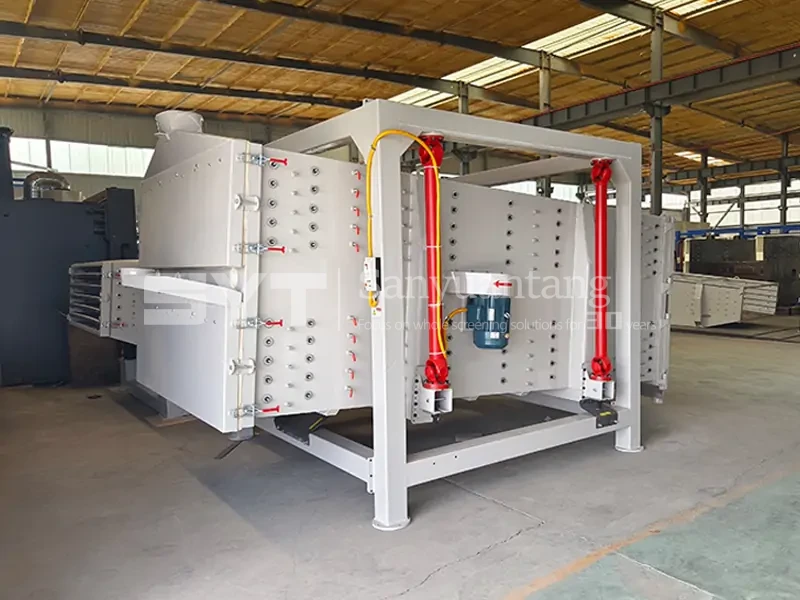
Middle-Mounted Drive Gyratory Sifter
The excitation source is positioned near the centre of the screen box to distribute screening force across the deck. This configuration is suited to fine chemicals, sugar, salt and other powders or granules requiring uniform screening action. Screen dimensions, deck arrangement and operating capacity are selected according to feed distribution and target particle sizes.
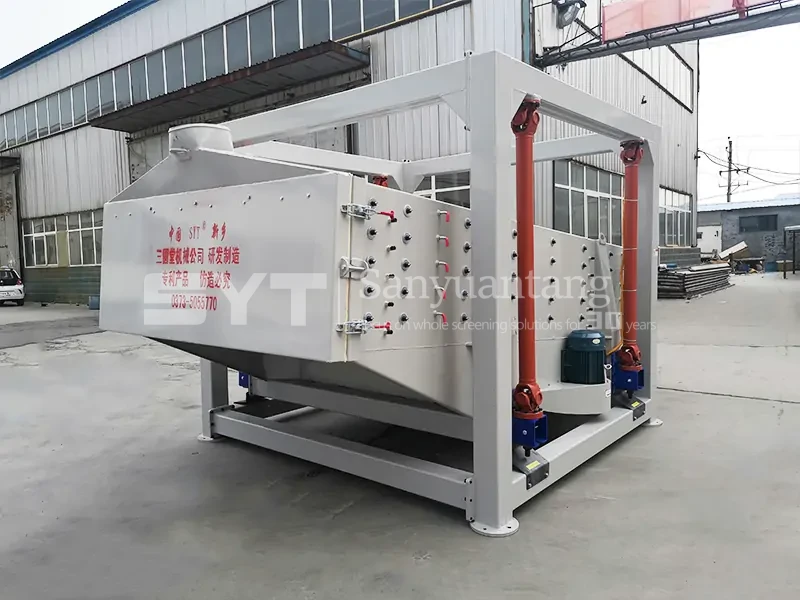
Bottom-Mounted Drive Gyratory Sifter
The excitation source is installed beneath the screen box to reduce vibration loading on the upper structure and support stable operation with heavy material loads. Typical applications include quartz sand, mineral powders, abrasives and metallurgical materials. Selection considers material loading, structural support, maintenance access and the required feed and discharge elevations.
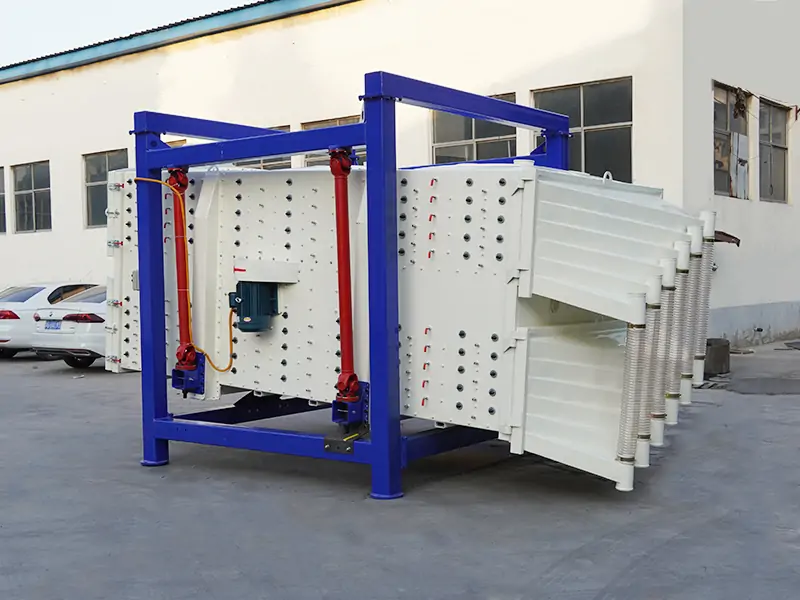
Single-Source Gyratory Sifter
Available in FYBS-1536 and FYBS-2040 configurations, the single-source series provides a published capacity range of 0.5–13 t/h, with 2–300 mesh selection and 1–10 screen layers. Its single eccentric excitation mechanism and accessible screen frames suit fine mineral powders, frac sand, sugar and industrial salt. Select this configuration when precise grading and straightforward maintenance are priorities within the required throughput.
Dual-Source Gyratory Sifter
The FYBS-2040 dual-source series provides a published capacity range of 1–25 t/h, with 2–180 mesh selection and configurable screening decks and outlets. Its dual-source mechanism generates a controlled elliptical reciprocating trajectory for continuous classification of quartz sand, silica sand, ceramic proppants, calcium carbonate and petroleum coke. Select this configuration for higher-throughput processing lines requiring several product size fractions.
Screen Mesh and Multi-Grade Particle Classification
The Sanyuantang gyratory sifter supports 2–200 mesh screening with up to 10 screen decks for multi-grade particle classification. Different mesh apertures can be arranged within one machine to separate dry bulk materials into specified size fractions. Screen configuration is selected according to the feed particle size distribution, required product grades and processing capacity.
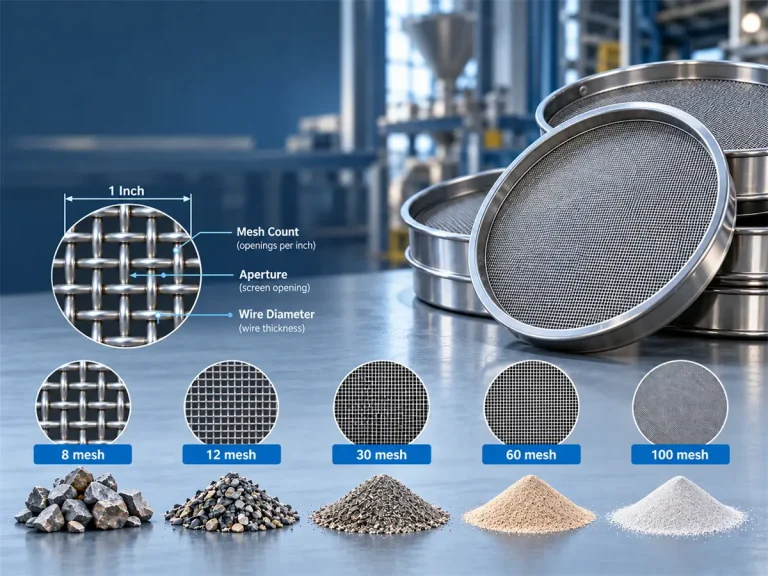
Screen Mesh Sizes and Apertures
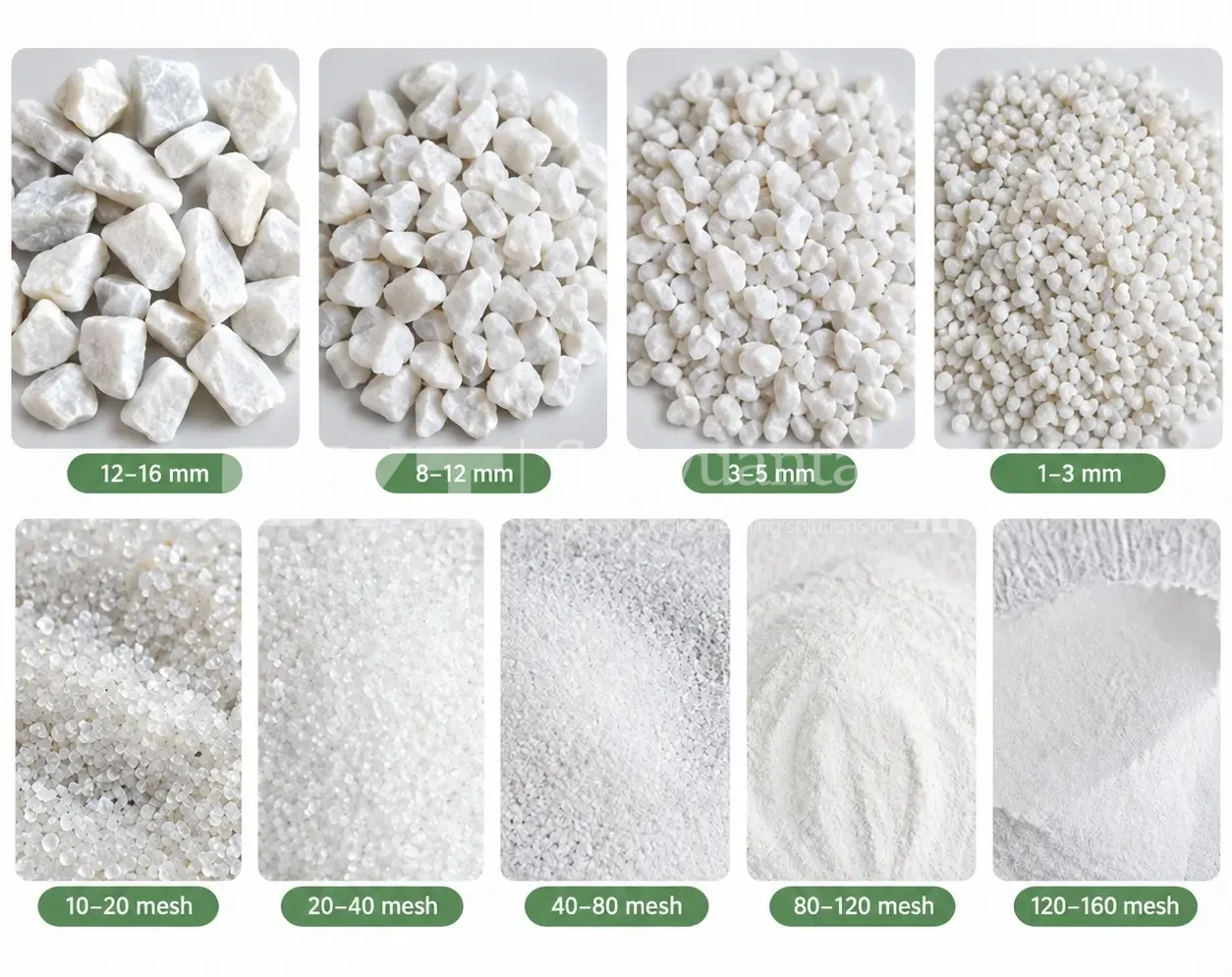
Screen mesh determines the nominal particle separation size. Sanyuantang offers different mesh openings for silica sand, quartz sand, frac sand, mineral powders and other dry granular materials. The final aperture should be specified in millimetres or micrometres to avoid differences between mesh standards.
| Mesh Size | Approx. Aperture | Typical Screening Duty |
| 8 mesh | 2.36 mm | Coarse particle removal |
| 20 mesh | 850 μm | Coarse sand classification |
| 40 mesh | 425 μm | Medium sand grading |
| 60 mesh | 250 μm | Fine sand classification |
| 70 mesh | 212 μm | Fine particle separation |
| 100 mesh | 150 μm | Fine mineral screening |
| 120 mesh | 125 μm | Fine powder classification |
| 200 mesh | 75 μm | Fine mesh screening |
Multi-Deck Screening and Product Grades
Multiple screen decks allow different particle size fractions to be separated within one gyratory screening machine. Each deck is fitted with a specified mesh aperture, with oversize and undersize material directed to the corresponding discharge outlets.
| Screen Decks | Theoretical Size Fractions | Typical Application |
| 1 Deck | 2 | Oversize removal or basic grading |
| 2 Decks | 3 | Coarse, medium and fine separation |
| 3–4 Decks | 4–5 | Multi-grade sand and mineral classification |
| 5–8 Decks | 6–9 | Industrial multi-fraction screening |
| 9–10 Decks | 10–11 | Complex multi-grade classification |
Screen Cleaning and Mesh Maintenance
Regular sieve cleaning and maintenance help maintain screening efficiency and prevent mesh blockage or damage. After operation, remove residual material from the screen surface and inspect the mesh for wear, tears, or loose tension. Replace damaged screens promptly to maintain screening accuracy. When changing the mesh, release the screen frame, remove the old mesh, install and tension the replacement, then secure the frame before restarting the machine.
Watch the video below for step-by-step instructions on replacing the vibro sifter screen mesh.
Contact Us
Need Help Choosing the Right Screen Mesh?
Share your material type, particle size distribution, required mesh sizes and processing capacity (TPH). Sanyuantang engineers can help you select the right mesh apertures, number of screen decks and discharge configuration for your gyratory sifter.
Get Mesh Configuration Advice
Applications
Gyratory sifters support continuous, multi-grade particle classification across mineral processing, chemicals, food, metallurgy and other bulk material industries, combining gentle screening motion, enclosed construction and mesh cleaning to maintain consistent material flow.

Industrial Minerals & Glass
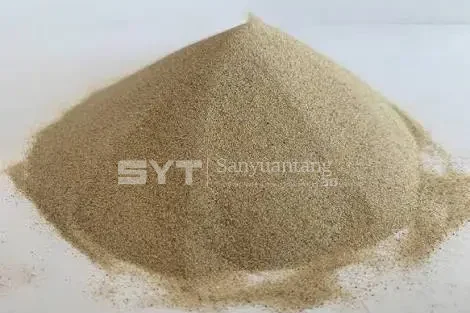
Grades silica sand, quartz sand, mica, calcium carbonate and talc into controlled particle size fractions for glass manufacturing and industrial mineral processing.
Oil & Gas Proppants
Classifies frac sand and ceramic proppants into specified size grades, removing oversized particles and fines while limiting particle attrition.
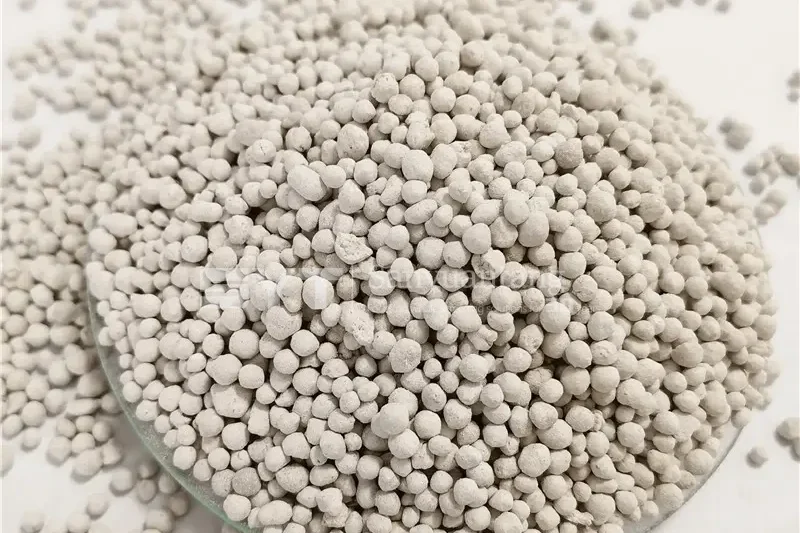
Chemicals & Fertilizers
Screens soda ash, industrial salt, urea, compound fertilizers, resin and polypropylene granules to control product size distribution and separate off-size material.

Food Ingredients
Grades sugar, salt, starch, milk powder and food additives, removing oversized particles before downstream blending or packaging.
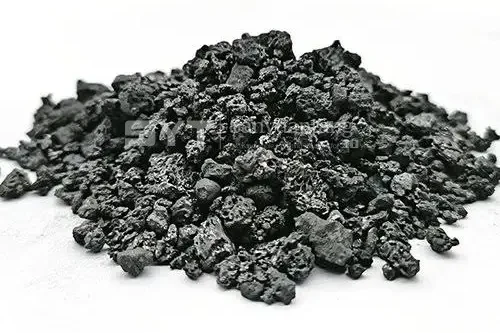
Metallurgy & Carbon Materials
Classifies metal silicon powder, metal powders, petroleum coke, calcined coke and recarburizers to meet particle size requirements for blending, dosing and further processing.
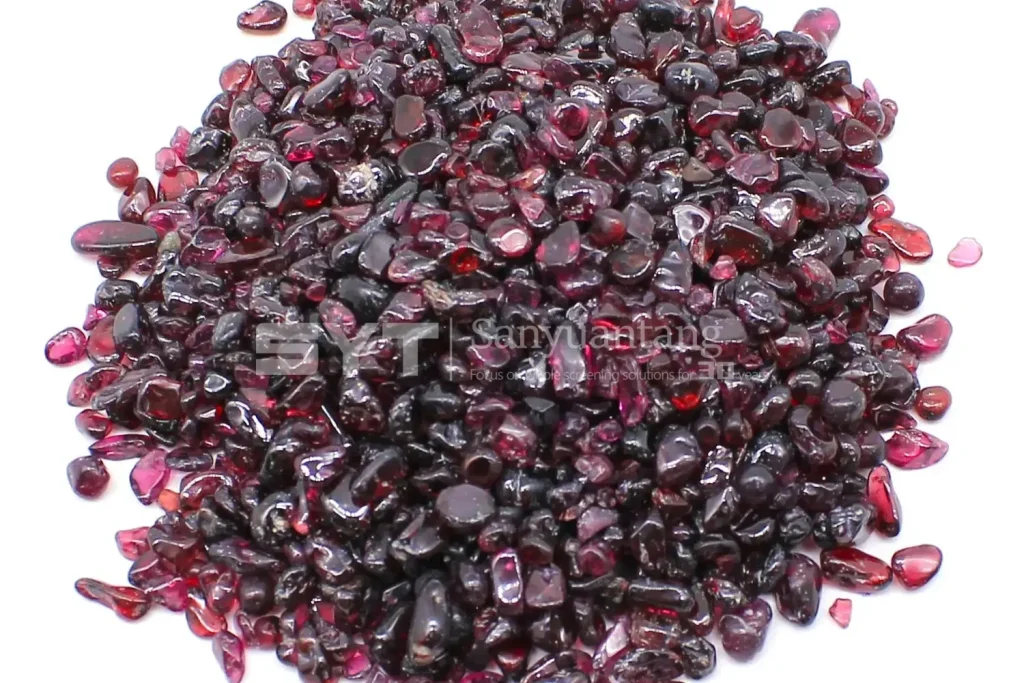
Abrasives, Ceramics & Building Materials
Separates garnet, alumina, emery, refractory powders, ceramic sand and perlite into application-specific grades for abrasive, ceramic and construction material production.
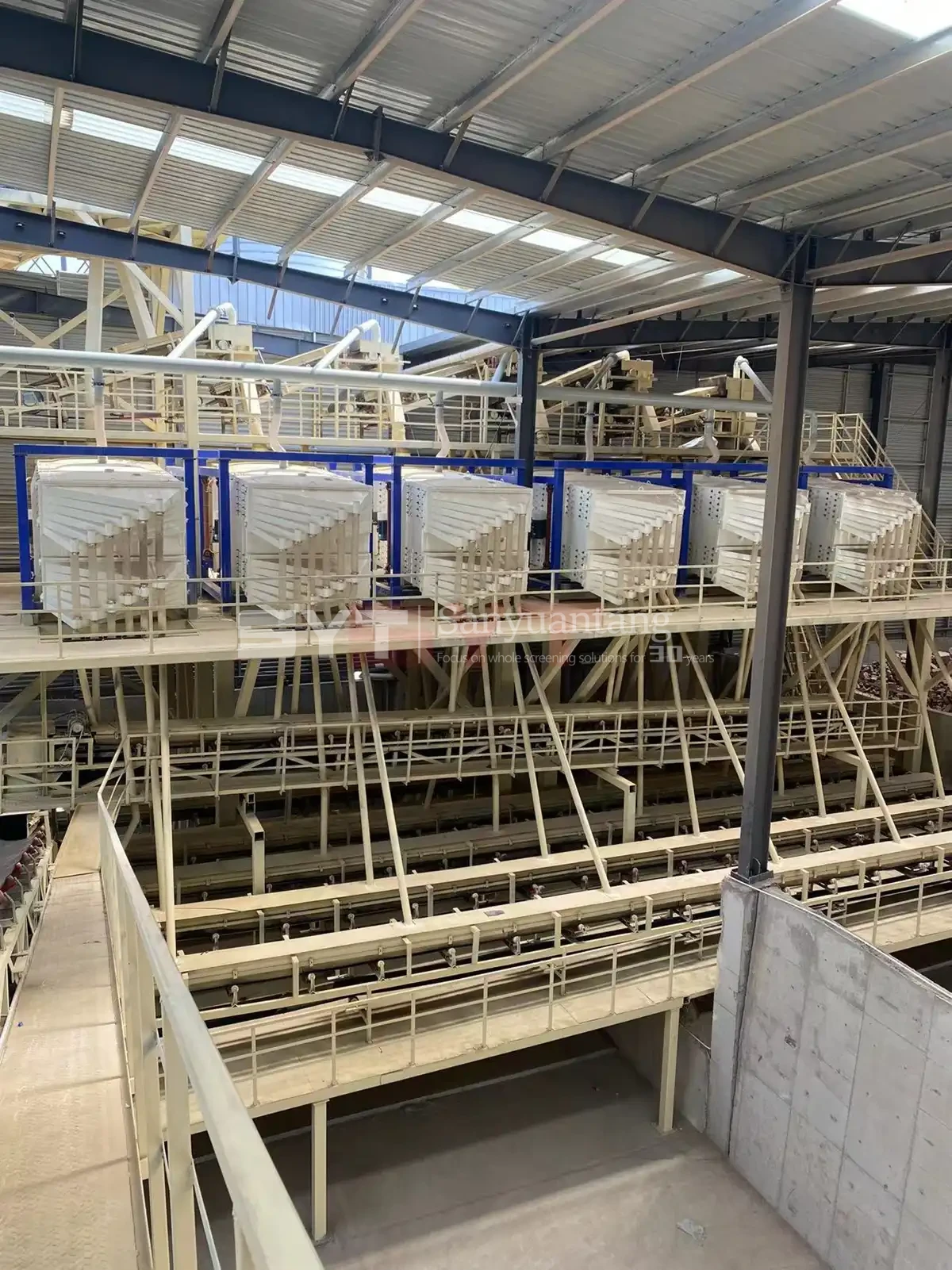
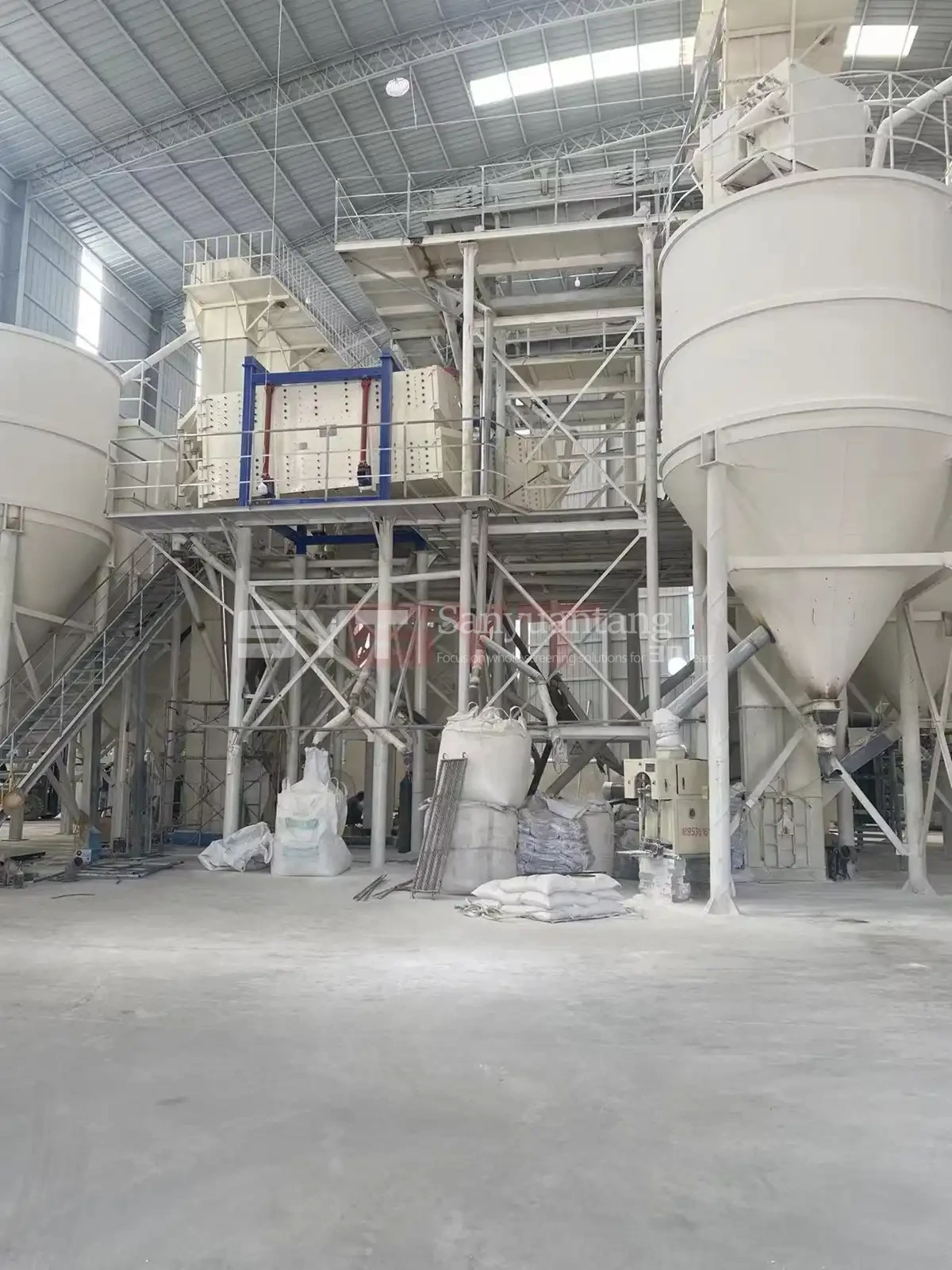
Gyratory Sifter Customer Installations & Production Lines
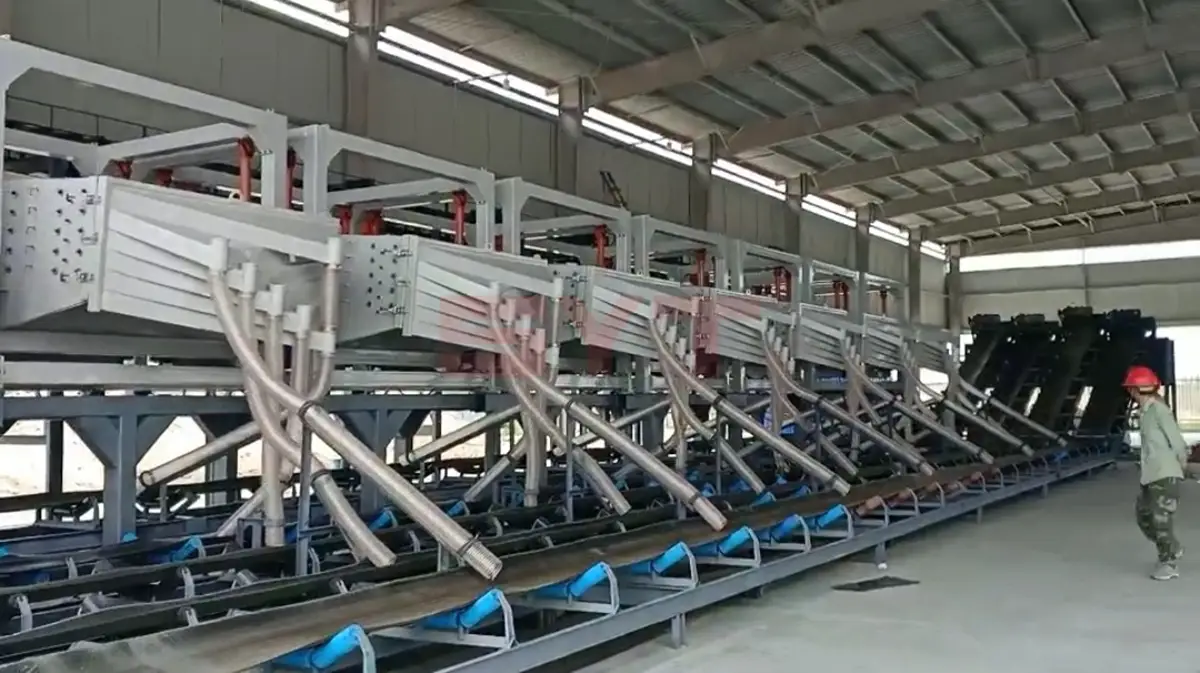
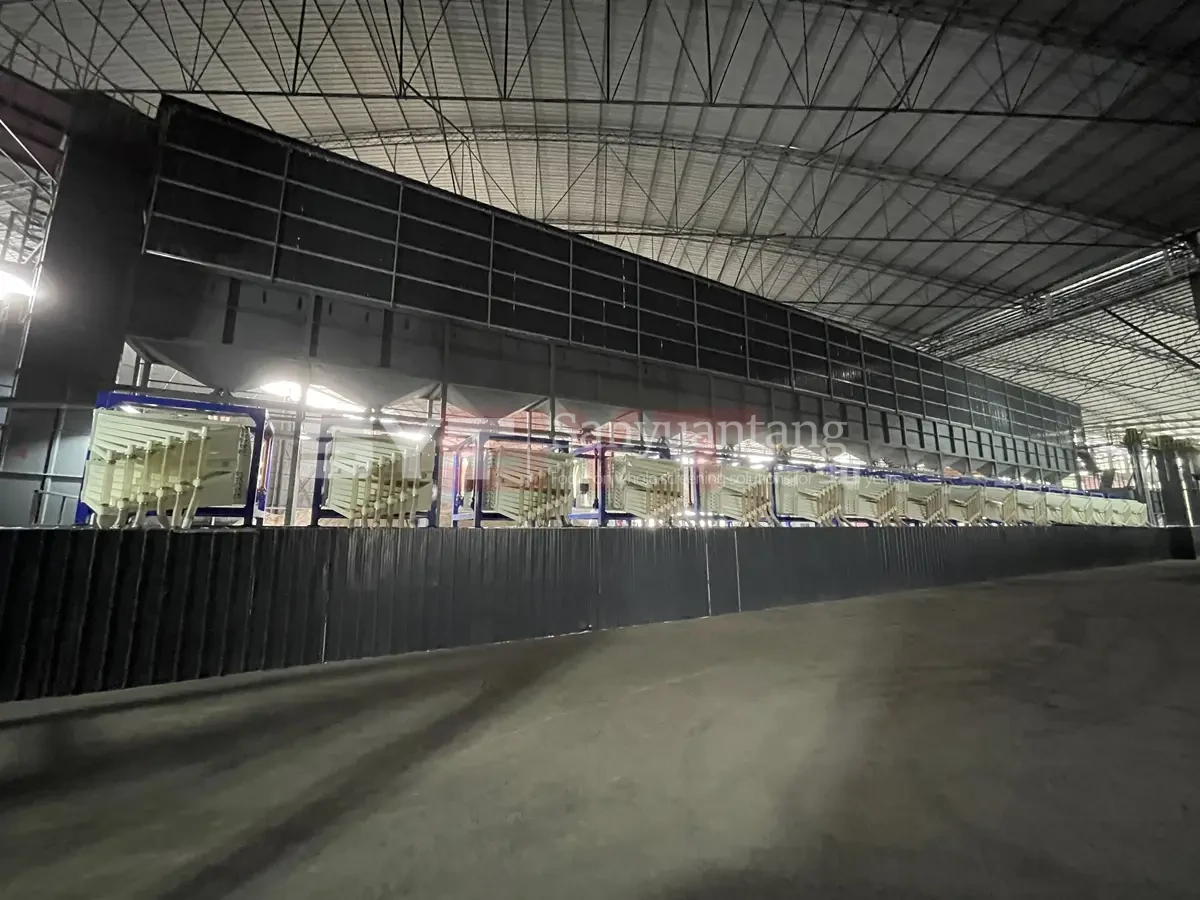
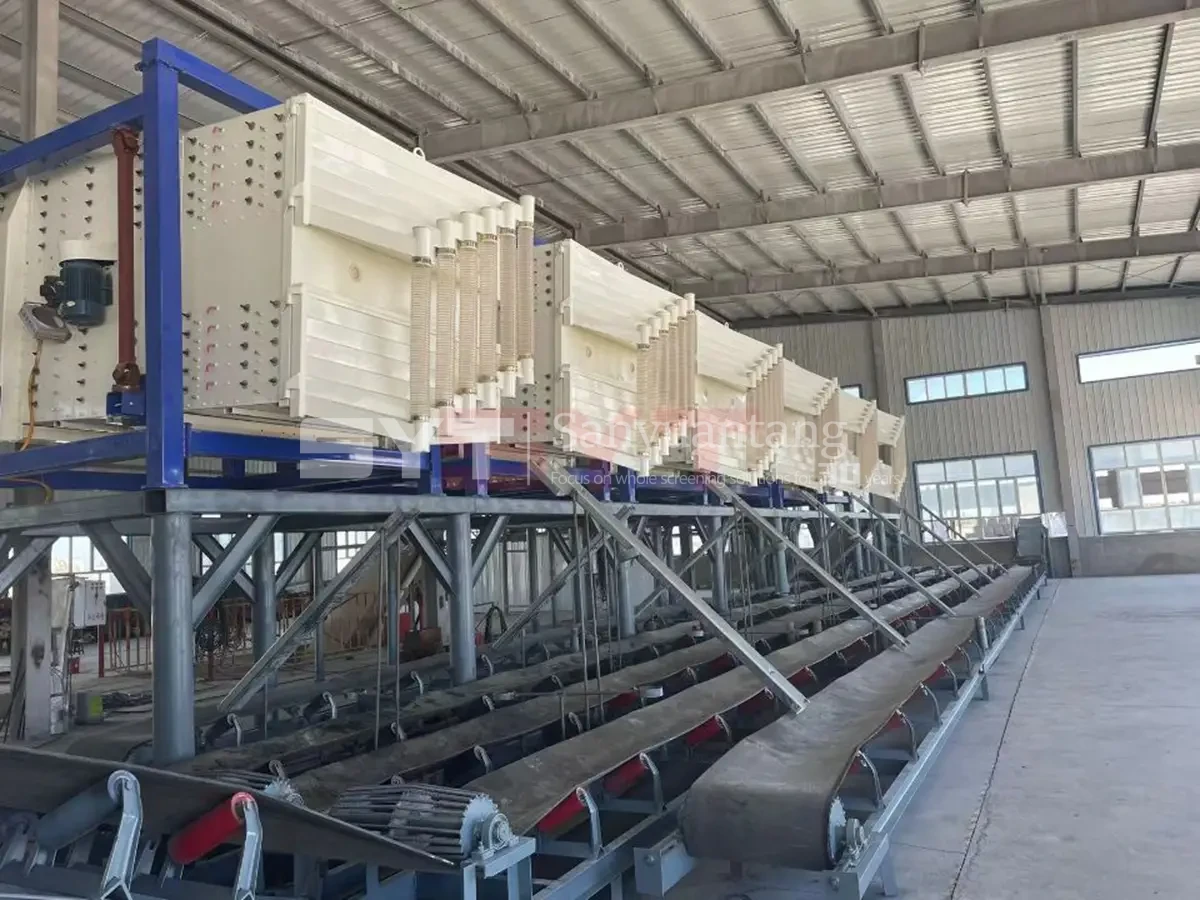
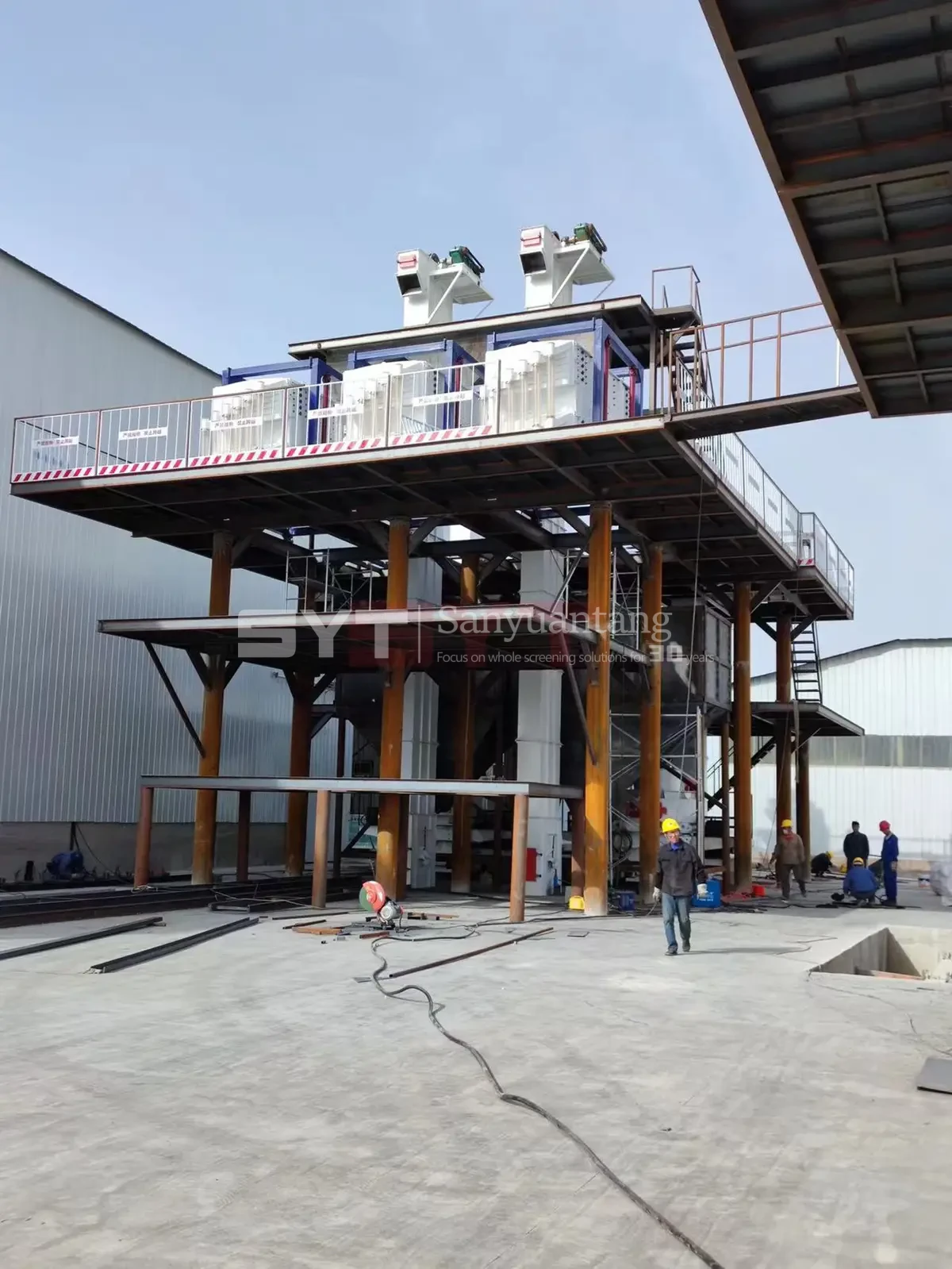
Sanyuantang gyratory screening systems are installed in multi-unit screening lines, centralized feeding systems, and conveyor-integrated processing plants. These project photos show different equipment arrangements for particle classification, material discharge, and bulk handling.
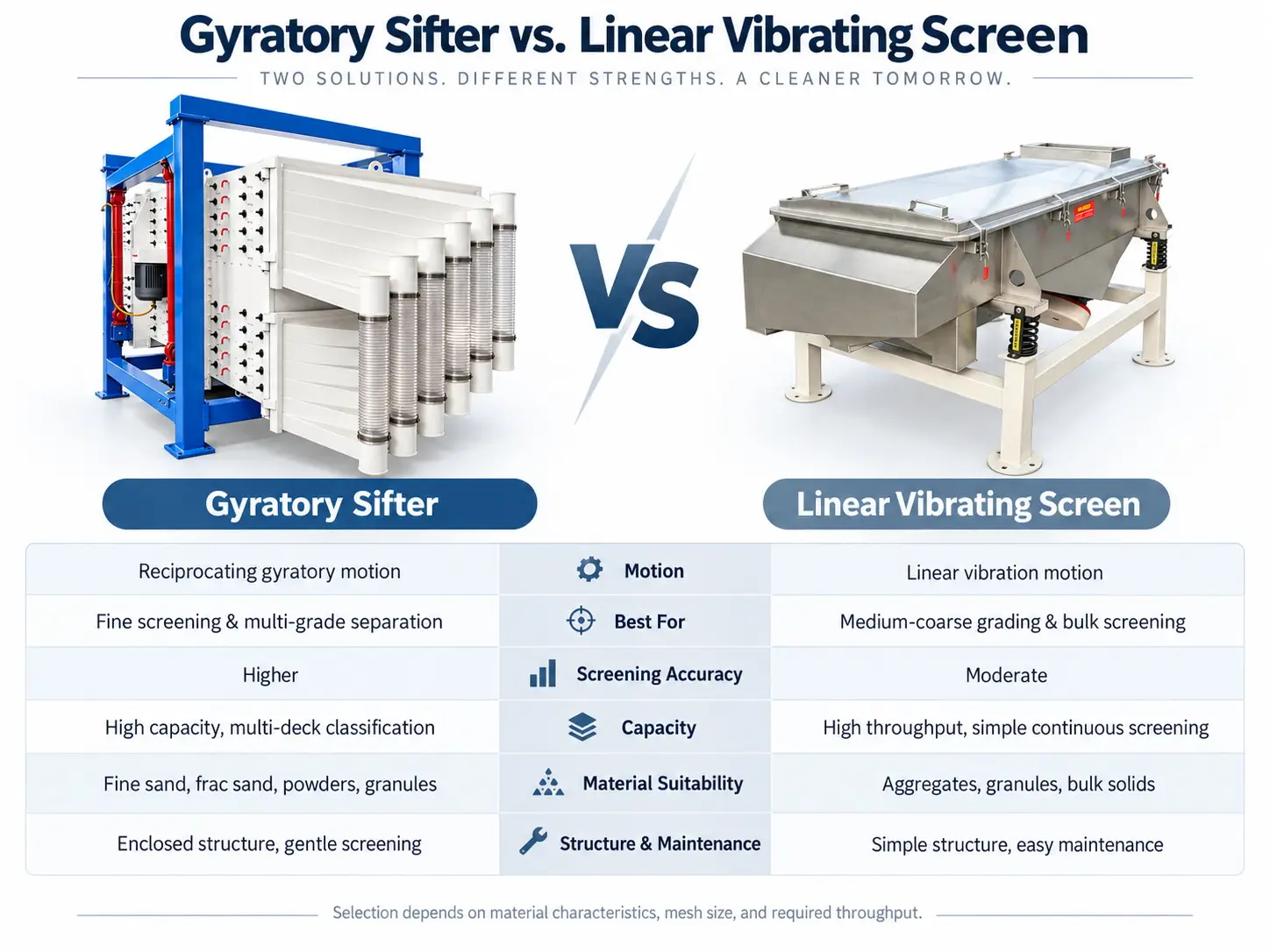
Gyratory Sifter vs. Linear Vibrating Screen
Gyratory sifters and linear vibrating screens differ in screening motion, screen area, mesh range and multi-grade separation capacity. Gyratory sifters are commonly selected for high-throughput classification of dry silica sand, quartz sand and other free-flowing materials, while linear vibrating screens are used for continuous grading, scalping and fines removal. Screen aperture, deck quantity and processing capacity should be evaluated against the feed particle size distribution and required product grades.
| Selection factor | Gyratory sifter | Linear vibrating screen |
|---|---|---|
| Motion | Gyratory reciprocating movement | Linear vibration |
| Deck arrangement | Large rectangular surface with multi-layer options | Rectangular screening deck |
| Typical duty | Continuous, multi-grade particle classification | General screening with directional material conveying |
| Sizing priorities | Required grades, screen area and near-size particle content | Feed rate, material travel and target aperture |
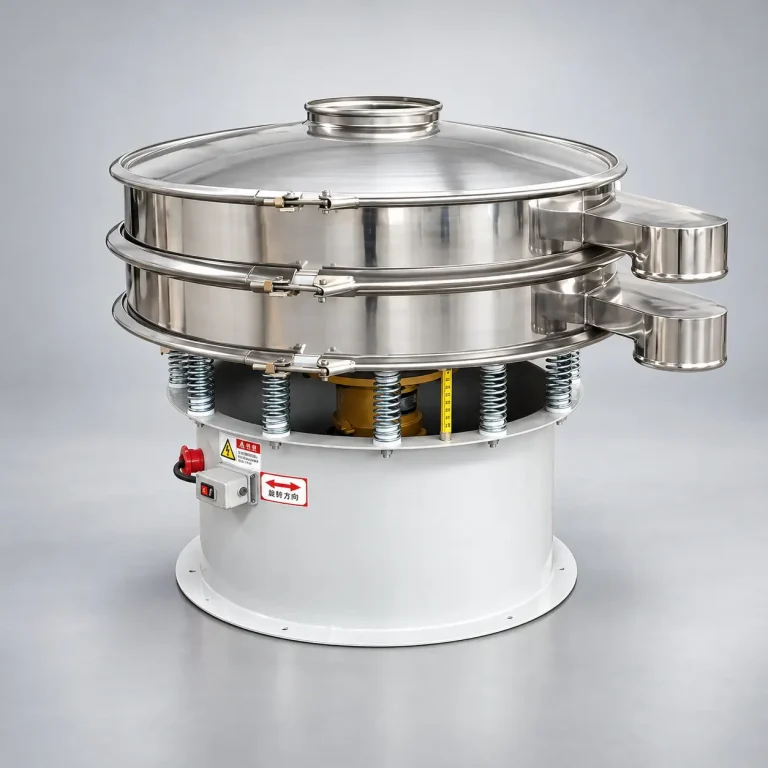
For dry sand with several specified grades, evaluate a gyratory screener against the complete feed distribution. For simpler screening and stronger conveying action, a linear screen may be suitable. Final selection should reflect testing and installation requirements. For circular powder screening duties, see our industrial vibro sifter.
Gyratory Sifter Selection Guide
Send the following information to help Sanyuantang select a screen size, deck sequence and feeding arrangement.
| Required information | Details to provide |
|---|---|
| Material | Name, bulk density, moisture and temperature |
| Feed particle size | Sieve analysis or particle size distribution |
| Throughput | Required tons per hour and operating hours per day |
| Target separation | Apertures, number of product grades and acceptable oversize or undersize |
| Product distribution | Expected proportion of material in each fraction |
| Installation | Available space, feed height and discharge connections |
| Construction and services | Contact material, power supply, dust control and wear-protection requirements |
A material sample is helpful for complex screening duties. Equipment recommendations should consider the complete process rather than a capacity figure alone.
Gyratory Sifter Production Line Integration
Sanyuantang supplies gyratory sifters for standalone operation and integration into continuous bulk material processing lines. Our screening systems can be connected with belt conveyors, bucket elevators, feed hoppers and storage silos for multi-grade particle classification. Equipment layout, feeding capacity, discharge connections and dust collection are planned according to the material flow and required throughput.
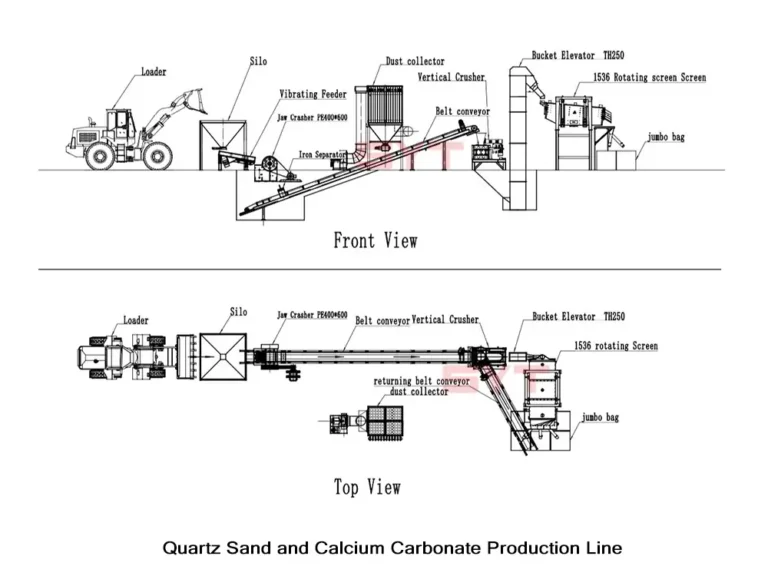
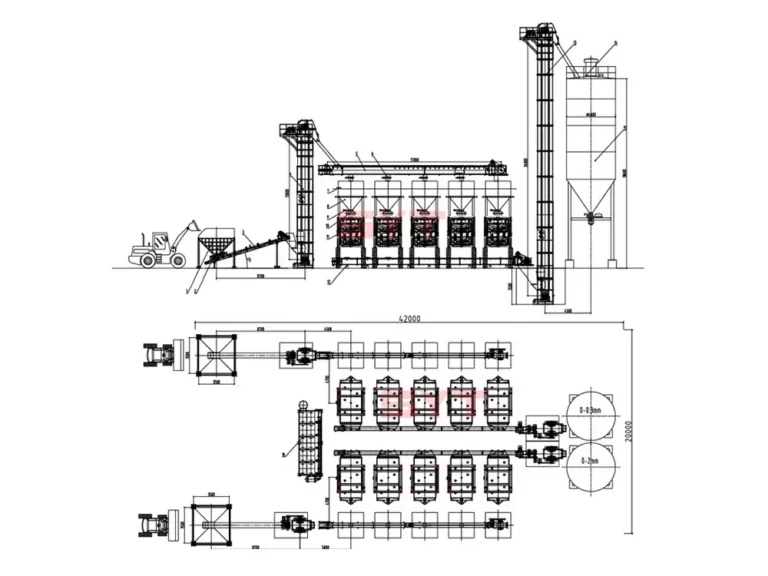
Gyratory Screening Line
A gyratory screening line combines controlled material feeding, particle size classification and separate product collection. For silica sand, quartz sand and other dry granular materials, the system can be arranged as follows:
| Equipment | Function |
| Feed Hopper & Feeder | Provides controlled material feeding and helps prevent excessive screen loading. |
| Belt Conveyor / Bucket Elevator | Transfers bulk material to the gyratory sifter at the required elevation and feed rate. |
| Material Distribution System | Spreads incoming material across the screen width for more uniform deck loading. |
| Gyratory Sifter | Separates dry bulk materials into specified particle size fractions using single or multiple screen decks. |
| Discharge Chutes & Conveyors | Direct each separated fraction to its designated conveying or collection point. |
| Storage Silos / Packing Equipment | Receive classified products for storage, weighing or packaging. |
| Dust Collection System | Connects to enclosed transfer points to control airborne dust during screening and discharge. |
Custom Gyratory Sifters
Sanyuantang offers custom gyratory sifters for different materials, screening capacities and production line requirements. Machine dimensions, screen configurations and feeding and discharge arrangements can be adjusted to suit your existing equipment and plant layout. Our engineers can review your material specifications and recommend a suitable configuration.
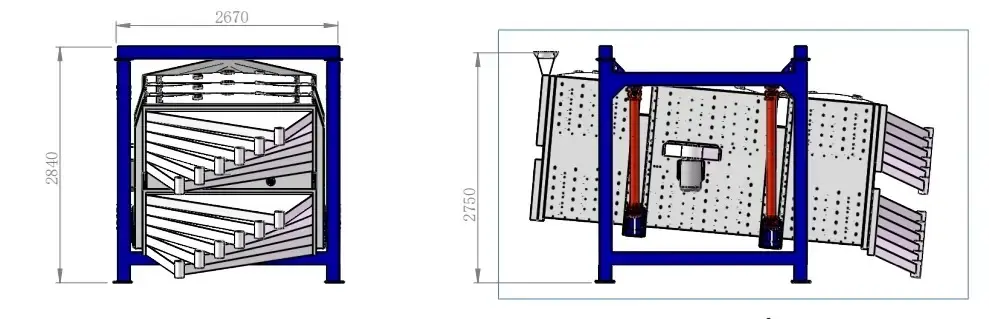
Available Customization Options
- Machine Size: Screening area and machine dimensions based on required throughput and installation space.
- Screen Decks: Single or multiple decks for different particle size classifications.
- Screen Mesh: Custom mesh apertures and mesh materials according to particle size and screening requirements.
- Contact Materials: Carbon steel, stainless steel or other specified materials for product-contact parts.
- Inlet & Outlet Configuration: Customized feeding and discharge positions to match existing conveyors and downstream equipment.
- Screen Cleaning System: Bouncing balls or other suitable cleaning devices to reduce mesh blockage.
- Dust Control: Enclosed covers, seals and dust collection connections for cleaner operation.
- Supporting Structure: Custom support frames, platforms and installation arrangements.
Send us your material details, target mesh sizes, required capacity (TPH) and production line layout. Sanyuantang will recommend a suitable gyratory sifter configuration and provide a quotation.
Gyratory Sifter Manufacturer & Supplier
Founded in 1994, Sanyuantang (Xinxiang Sanyuantang Machine Co., Ltd.) is a Chinese manufacturer of gyratory sifters, industrial screening equipment and bulk material handling systems. Our 8,000 m² manufacturing facility includes 5,000 m² of production workshops, with over 100 employees and more than 50 management and technical personnel. With 40+ product patents, ISO 9001 and CE certification credentials, we supply rectangular gyratory screeners and customized screening lines for silica sand, quartz sand, frac sand and other dry bulk materials. Our equipment has been supplied to customers in more than 70 countries.
Explore our brand story and services.
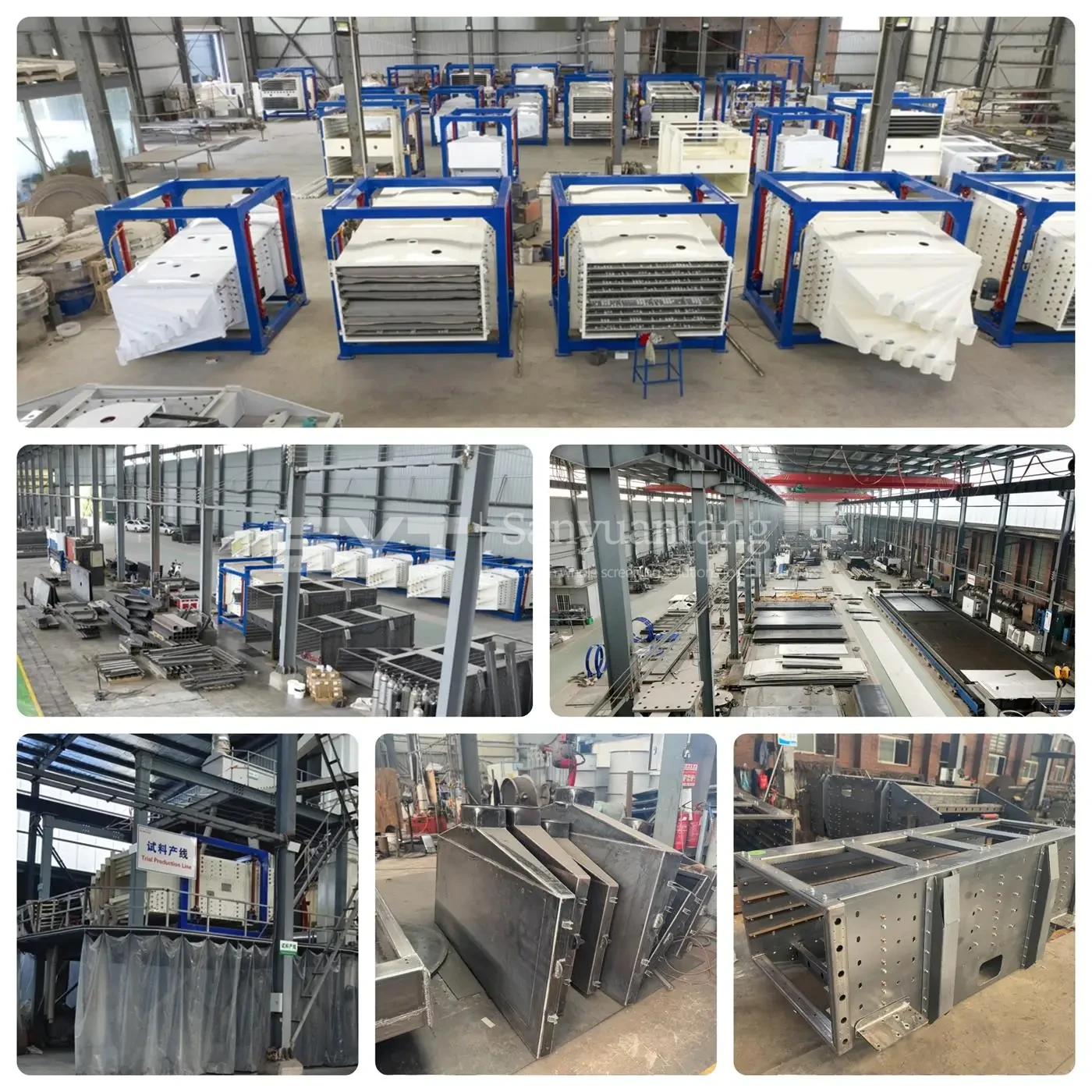
Our Manufacturing & Engineering Services
- Custom Gyratory Sifter Manufacturing
Custom screen dimensions, single- or multi-drive arrangements, screen decks, mesh apertures and discharge configurations for different materials and production capacities. - Material Testing & Equipment Selection
Material screening trials, mesh selection and capacity evaluation based on feed particle size distribution, target product grades and required throughput. Test videos and results are available for technical review. - Complete Screening Line Solutions
Engineering and equipment supply for feeding, conveying, multi-grade screening, product discharge and collection systems, including production line layout and equipment connections. - Factory Testing & After-Sales Support
Equipment assembly inspection, 24-hour pre-shipment trial operation, installation guidance, spare parts supply and remote technical support. A one-year equipment warranty is stated in our service policy.
Contact Us
Request a Gyratory Sifter Quote
Send your material characteristics, required capacity, mesh apertures and finished product grades. Sanyuantang can review the screening duty and recommend a suitable rectangular gyratory screener configuration.
Send Your Screening Requirements
FAQs
What is the difference between a gyratory sifter and a gyratory screener?
Both terms commonly describe the same type of industrial screening equipment. A rectangular gyratory sifter uses reciprocating motion to separate bulk materials into particle size fractions. The selected screen apertures, deck arrangement and feed characteristics determine its separation duty.
How many screen decks can a gyratory sifter have?
The FYBS range lists configurations with 1–10 screen layers. The suitable number depends on the required product grades, equipment arrangement and material flow. Confirm the actual deck layout and outlet arrangement during technical selection.
What mesh sizes are available?
The FYBS range lists 2–200 mesh. Specify the actual target aperture as well as the mesh designation because wire diameter and sieve standards affect the opening. The appropriate screening media also depends on the material and required throughput.
What is the processing capacity of a gyratory sifter?
The FYBS series gyratory sifter offers a processing capacity of 100 kg/h to 25 TPH, depending on the model and screening conditions. The single-drive configuration handles approximately 0.5–13 TPH, while the dual-drive FYBS-2040 model is rated at 1–25 TPH. Actual throughput depends on material bulk density, feed particle size distribution, screen mesh aperture, number of decks and required separation efficiency. For accurate equipment selection, we recommend providing your material specifications, target mesh sizes and required capacity.
Can a gyratory sifter screen silica sand and frac sand?
Yes. The FYBS gyratory sifter is suitable for high-capacity screening and multi-grade classification of dry silica sand, quartz sand and frac sand. Common frac sand product grades include 20/40, 30/50, 40/70 and 70/140 mesh, while industrial silica sand can be classified using screen apertures such as 8, 20, 40, 70 and 120 mesh. The FYBS series offers processing capacities of up to 25 TPH per unit, depending on screen configuration, feed particle size distribution and required separation efficiency.
How does the screen cleaning system help prevent blinding?
Bouncing balls beneath the mesh help dislodge particles caught in screen openings during operation. Their effectiveness depends on the material and aperture. Cleaning devices, screen tension and mesh condition should be inspected as part of routine maintenance.
Can the machine fit an existing production line?
Yes. Sanyuantang gyratory sifters can be configured for integration with existing sand processing and bulk material handling lines. We can customize the feed inlet, discharge outlet positions, equipment height and support structure to connect with belt conveyors, bucket elevators, feed hoppers and storage silos. For multi-grade screening, separate discharge chutes can be arranged for each product fraction. Our engineering team reviews the existing plant layout, required capacity (TPH), installation space, material flow, dust collection connections and maintenance access before confirming the equipment configuration.
What information is needed for a quotation?
Provide the material name, feed particle size distribution, required throughput, target apertures, number of product grades and installation requirements. Include moisture, bulk density and power supply where available. A material sample or sieve analysis helps with more demanding screening duties.